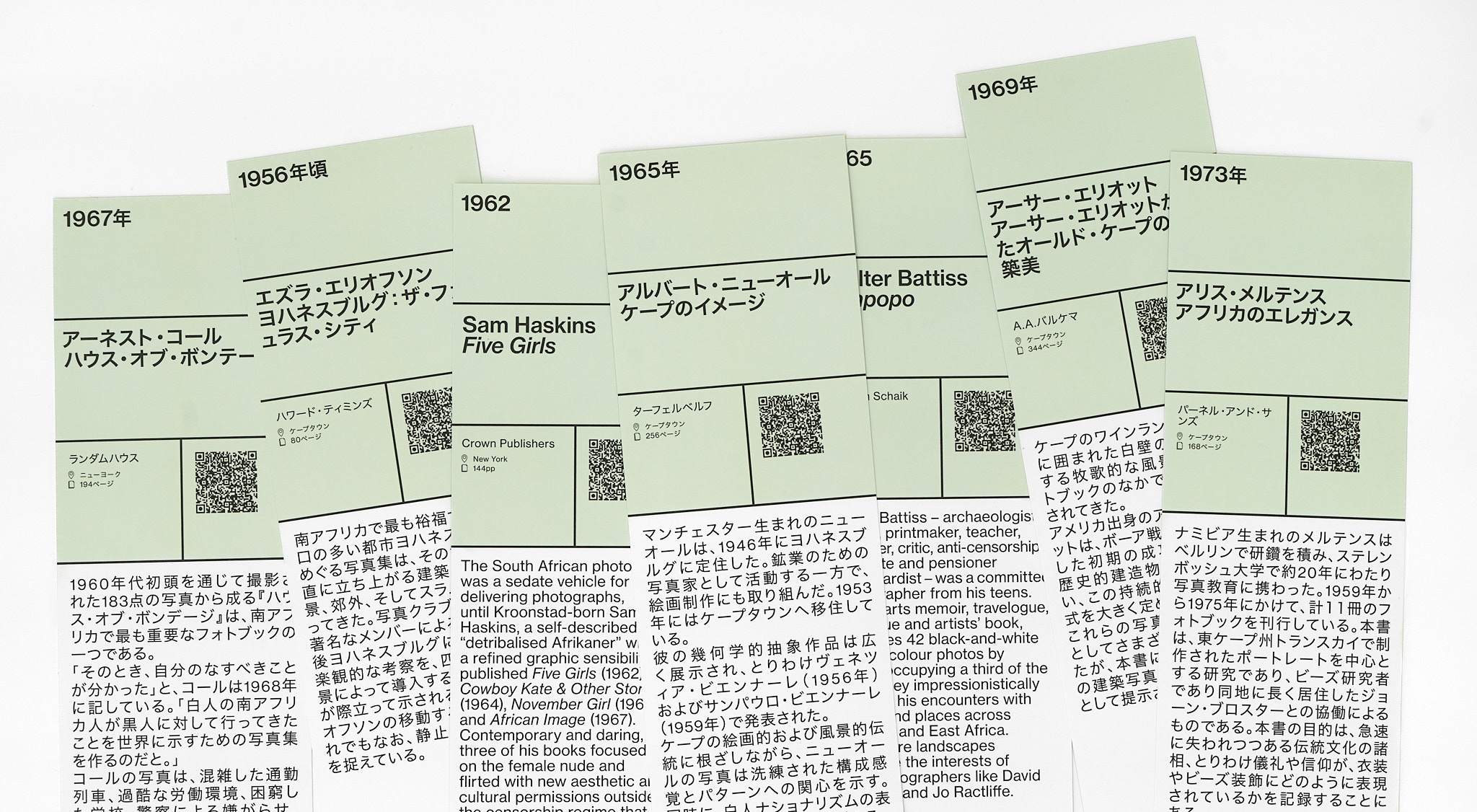
The three decades after World War Two witnessed the emergence of a cosmopolitan photobook culture in South Africa marked by formal experimentation, not only photographically but also at the level of book design and printing. Pictorialism and ethnography, ways of seeing and telling refined in the pre-war decades, continue to direct the subject preoccupations of many white photographers. Nonetheless, the aesthetic regime of the salons and photo societies is in decline. The National Party election victory in 1948 cannot be overlooked. State propaganda, surveillance and censorship are pronounced hallmarks of this period, and the next. Ernest Cole’s House of Bondage, published in 1967, marks a rupture. The white story about black life in South Africa is shown to be a lie. The book is banned, as are a number of photobooks with an evidentiary focus issued during this period.
• Keywords: whiteness, pictorialism, ethnography, amnesia, statism, propaganda, surveillance, terrorist
1945年頃ー1975年頃
第二次世界大戦後の約30年間、南アフリカでは現代的な写真集文化が台頭し、写真表現のみならず、書籍のデザインや印刷においても多様な形式的実験が展開された。戦前の数十年にわたり洗練されてきたピクトリアリズムや民族誌的視点、すなわち「見る方法」と「語る方法」は、この時代においてもなお、多くの白人写真家の主題選択を方向づけ続けていた。
しかしながら、サロンや写真協会によって築かれてきた美的体制は、次第にその影響力を失っていった。1948年の国民党の選挙勝利は、この時代を理解するうえで見過ごすことのできない転換点である。国家によるプロパガンダ、監視、検閲は、この時代から次の時代にかけて顕著な特徴となり、写真表現のあり方にも大きな影響を及ぼした。
1967年に刊行されたアーネスト・コールの『ハウス・オブ・ボンデージ』は、ひとつの断絶を示すものであった。南アフリカにおける黒人の生活をめぐる白人側の語りが虚構であったことが明らかにされる。本書は発禁処分となり、同時期に刊行された、証拠性に重きを置く複数の写真集も同様に禁止された。
キーワード:白人性、ピクトリアリズム、民族誌学、健忘、国家主義、プロパガンダ、監視、テロリスト