Penny Siopis
“We live in turbulent times. The integrity of our bodies and souls seems challenged at every turn. We are prey to violence, disease, global conflicts. We are so thin-skinned,” writes Penny Siopis. In the face of such vulnerability, we reach for comfort, sympathy and connection.
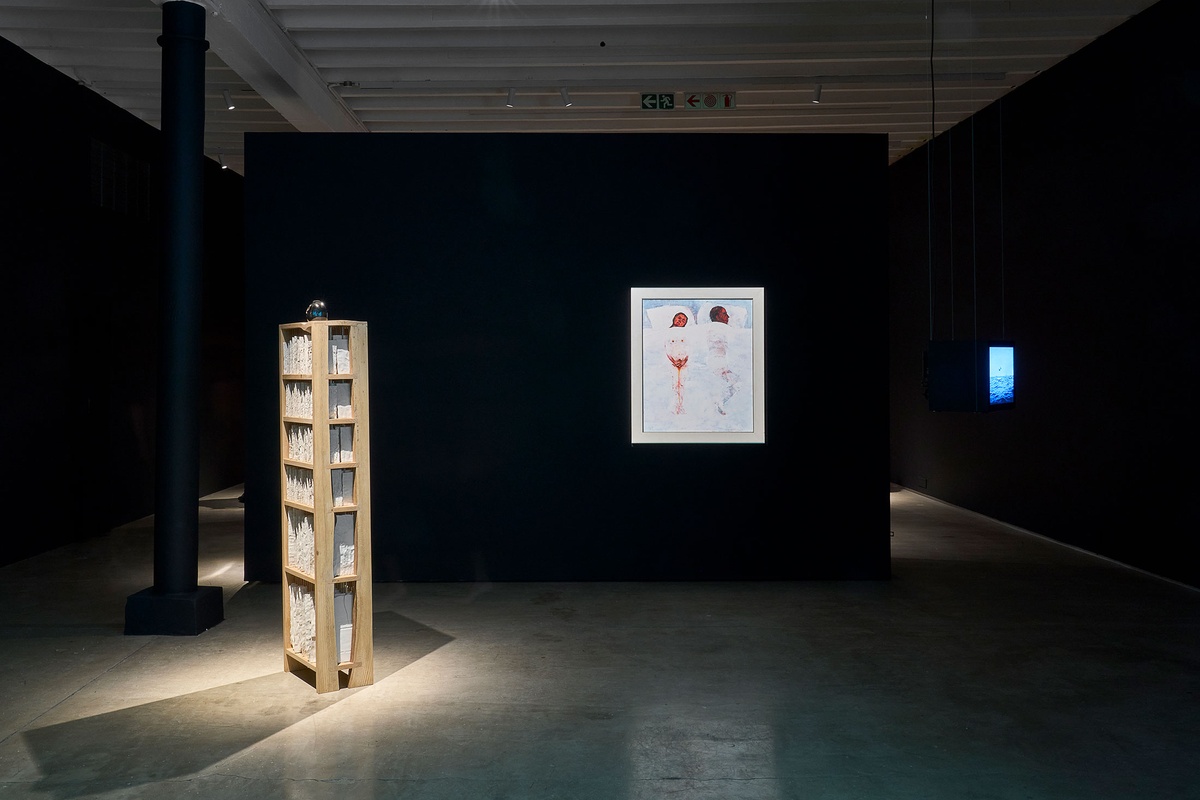
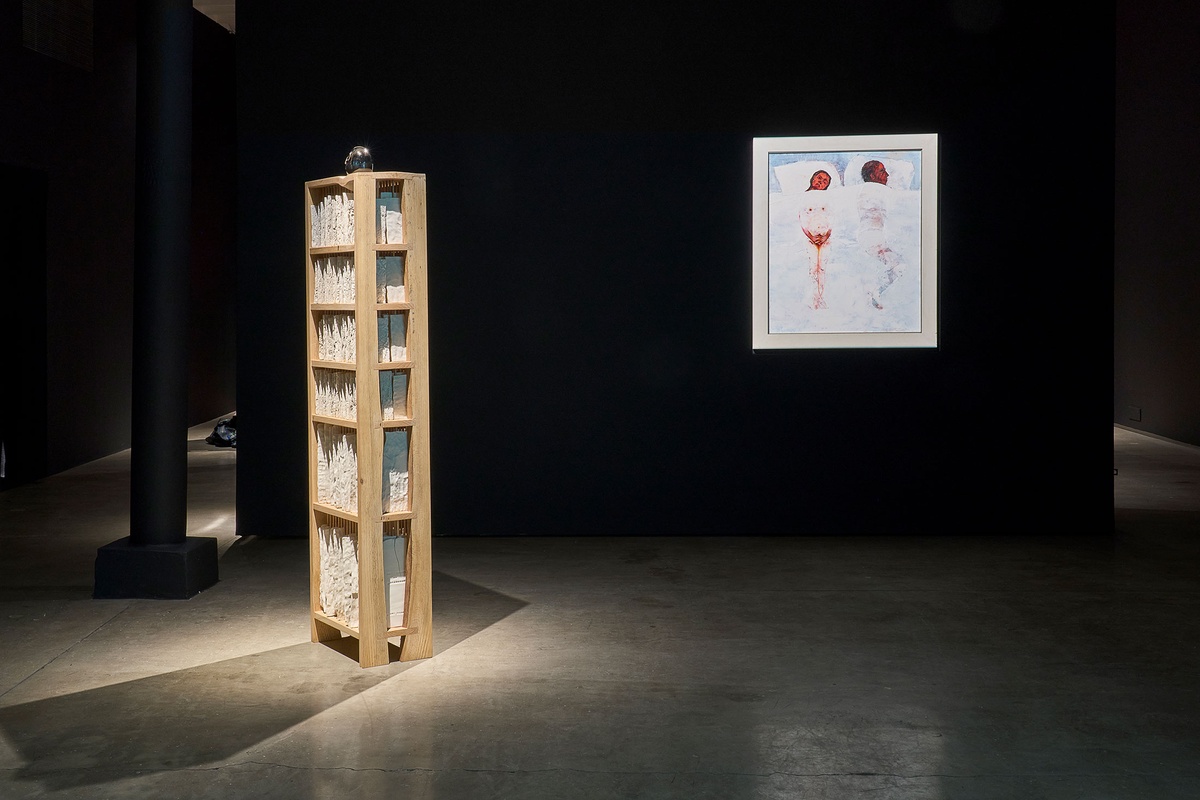
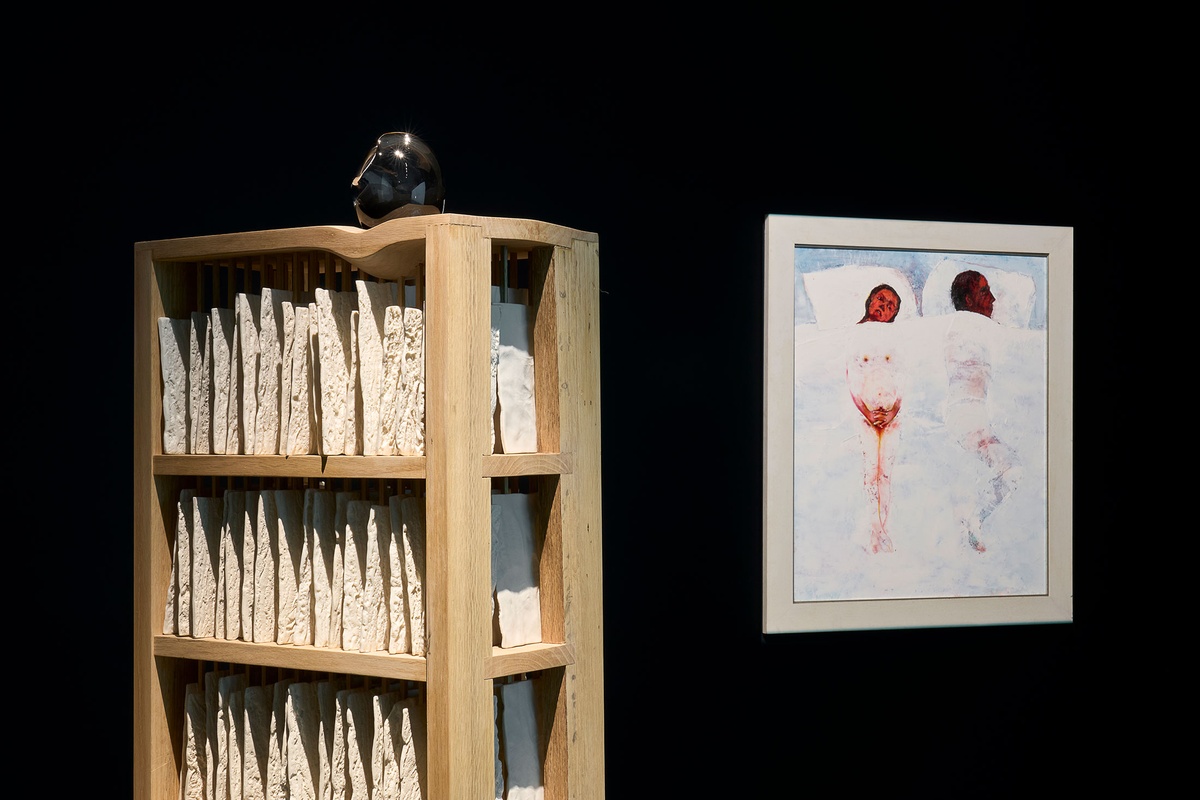
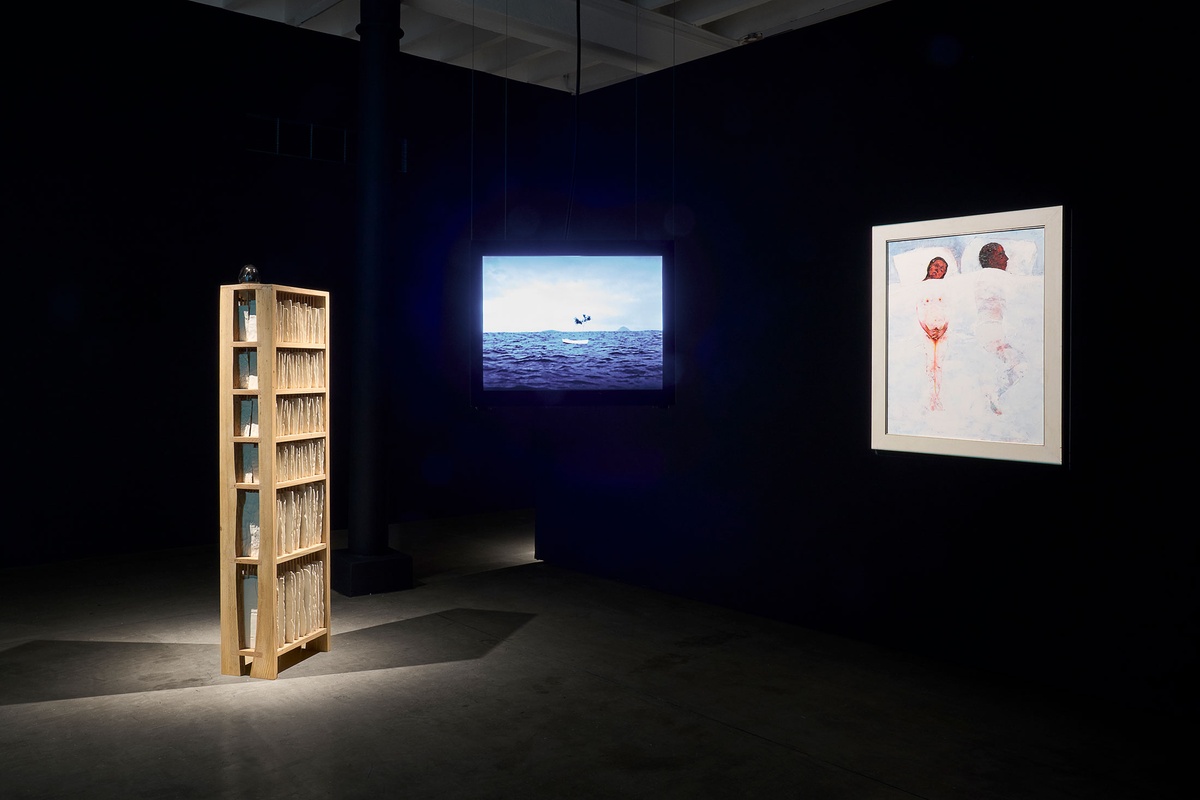
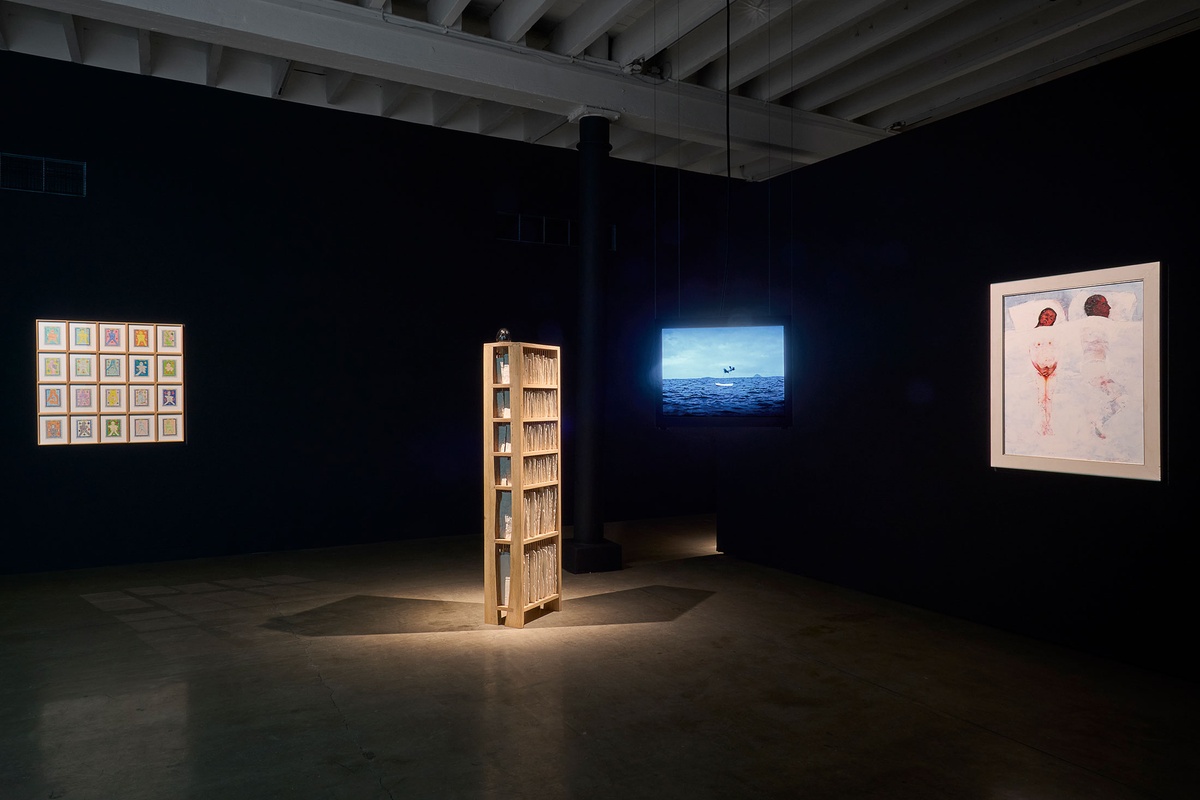
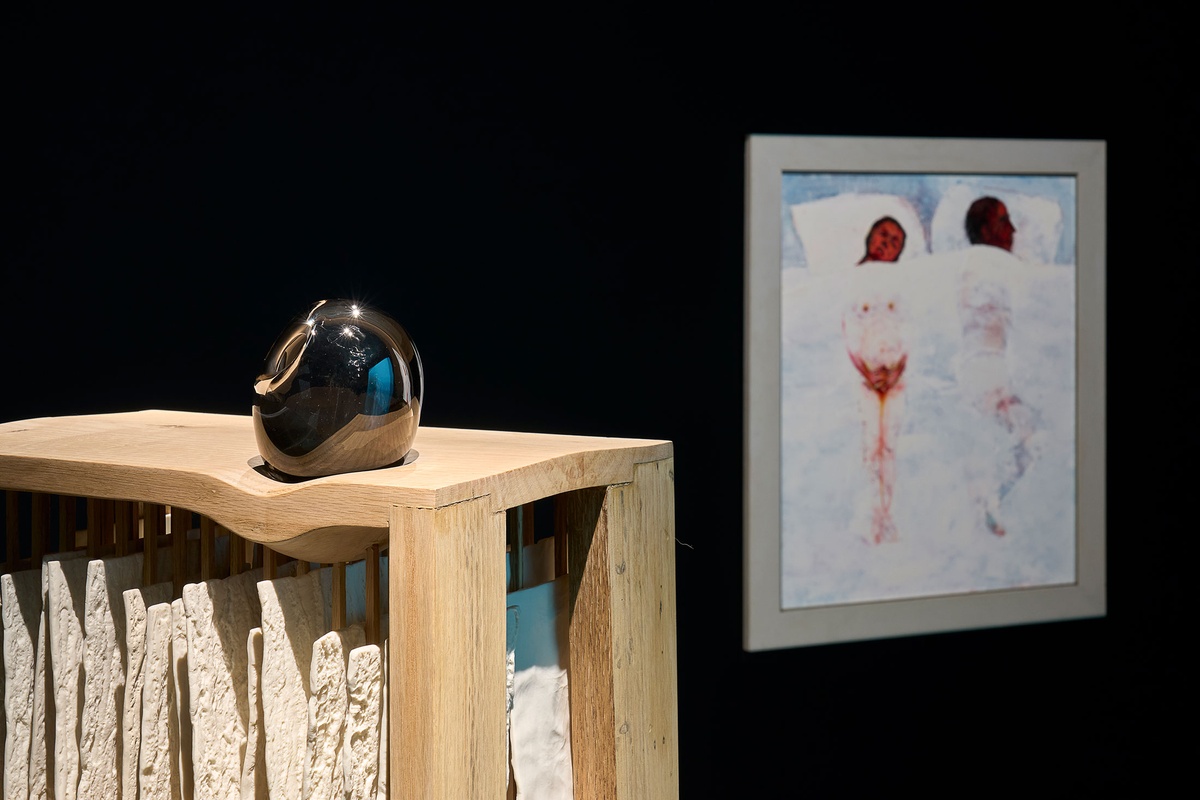
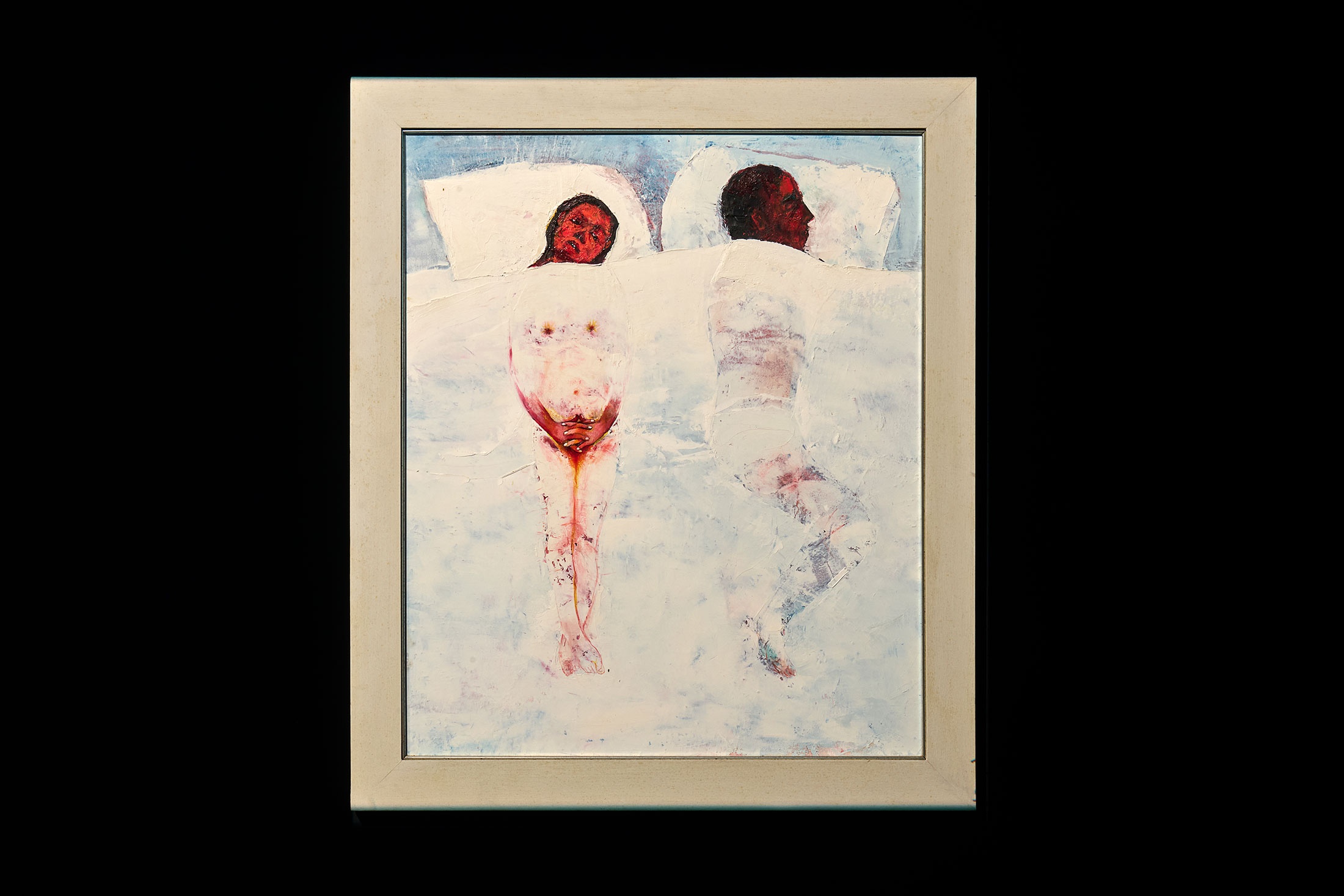
Yearning for this safety, Love describes an absence of touch – the loss of intimacy through which loneliness seeps in. Two frigid figures lie side by side, estranged even in their nearness. One partner has turned away, withdrawn and detached, while the other lies awake, adrift in thought. Siopis reflects, “What we don’t experience directly, we imagine. And imagination has its own way with horror, filling our minds with images that get under the skin of our most intimate relationships.” As her head droops with heaviness, the painted figure drifts to the place where imagination and experience converge, reflecting on the vicissitudes of love grown bitter. Glazed in glue, the bed feels cold and the bodies distant. Only her hands, holding each other, glow warmly. The gesture is enigmatic, as is the red pigment that reveals her form beneath the sheets. “Shame floods, colouring the outer surface of the body with its visible sign: blushing,” Griselda Pollock writes in her response to Siopis’s exhibition Three Essays on Shame (2005). “But it can also be the hidden shame that no one knows. It is other. The other that can heat and colour my body and silence my tongue.” In concealing her genitalia with this embrace, the figure invokes the weight of shame – that of desire and womanhood – a theme that Siopis so often speaks to in her works. Yet there remains a sense of ambiguity within this act: is it blushing, or warming with the possibility of change?
Love is part of a body of work first exhibited under the title Lasso – a word the artist describes as double-edged. It implies the risk of being subject to others’ violence, or an understanding and acceptance that suffering is an integral part of the world. Siopis uses this tension to explore both vulnerability’s ache and its potential for transformation. Gerrit Olivier suggests that even when Siopis’s work “deals with instability or despair, it is never despairing; instead, it is affirming and exhilarating, alert to the aliveness we can discover in the world and in ourselves.”
b.1953, Vryburg
In describing Penny Siopis’ practice, a necessary caveat: it is too slippery in form, too wide-ranging in ambition, to be distilled to pithy statement. Hers is an “aesthetic of accumulation,” a logic of excess, a hoarding of signs. Edges, boundary lines, beginnings and endings, states of change – these are among the subjects that inform her enquiries. As to a single preoccupation, the artist offers residue. A ‘historical materialist’, Siopis looks to the traces of past action, asks after the vibrancy of artefacts made and found, what they might recall of their provenance. She moves between modes with limber agility, playing the roles of both artist and archivist. While predominantly a painter, Siopis’ practice extends to include found film and objects in a sustained meditation on trauma as it appears, the artist writes, “in material amalgam.” From her early ‘history’ paintings to Will, a growing collection of objects and their anecdotes to be bequeathed to friends and family at the artist’s death, loss (past, forthcoming) is a constant undertone. Pursuing a “poetics of vulnerability”, Siopis transcribes, however obliquely, shared and individual griefs – punctuated by small moments of tactile transcendence – in the inherited images and historical flotsam, in the residue, with which she works.