Nicholas Hlobo
“There are still so many truths about myself that I don’t know,” Nicholas Hlobo confides in an interview with Sean O’Toole. Growing up in an Anglican household in the Eastern Cape, Hlobo longed for the traditional Xhosa rituals from which he was barred. Stories told about these ceremonies foreshadowed the mystical scenes and diverse worlds in his artworks – the artist enacting those cultural passages to which he felt drawn.
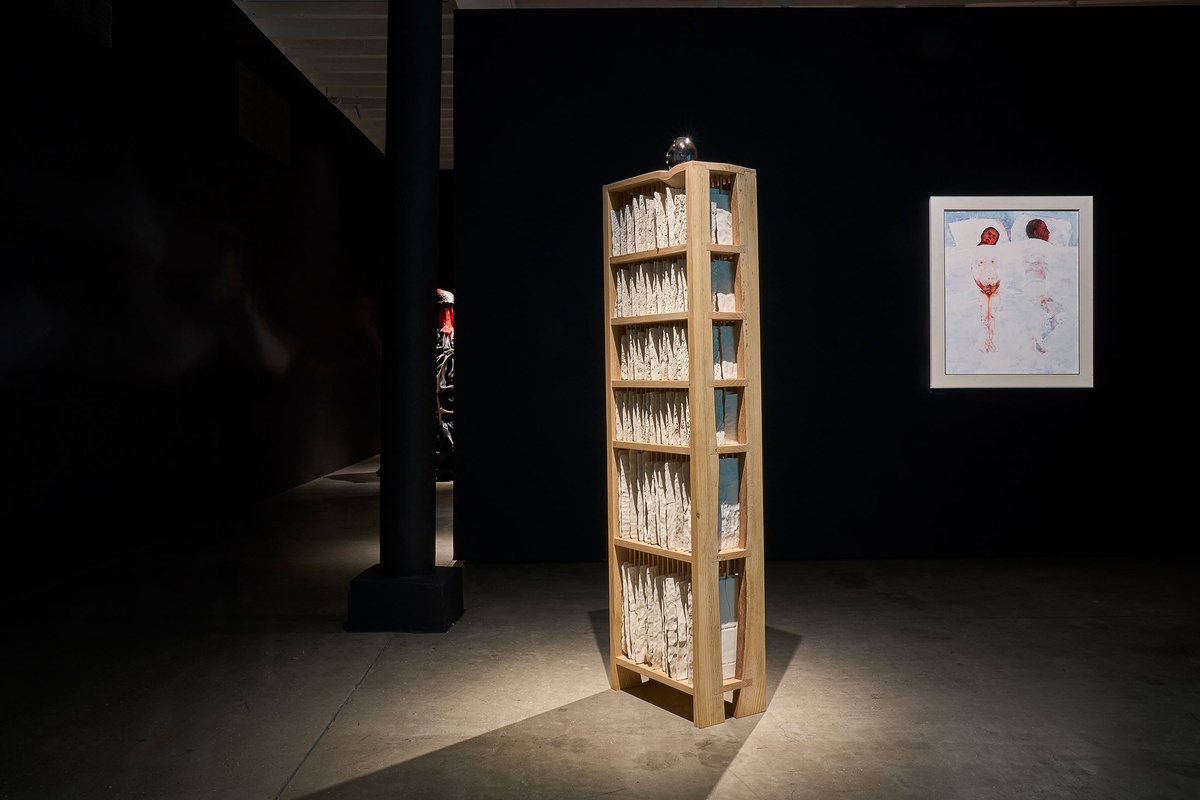
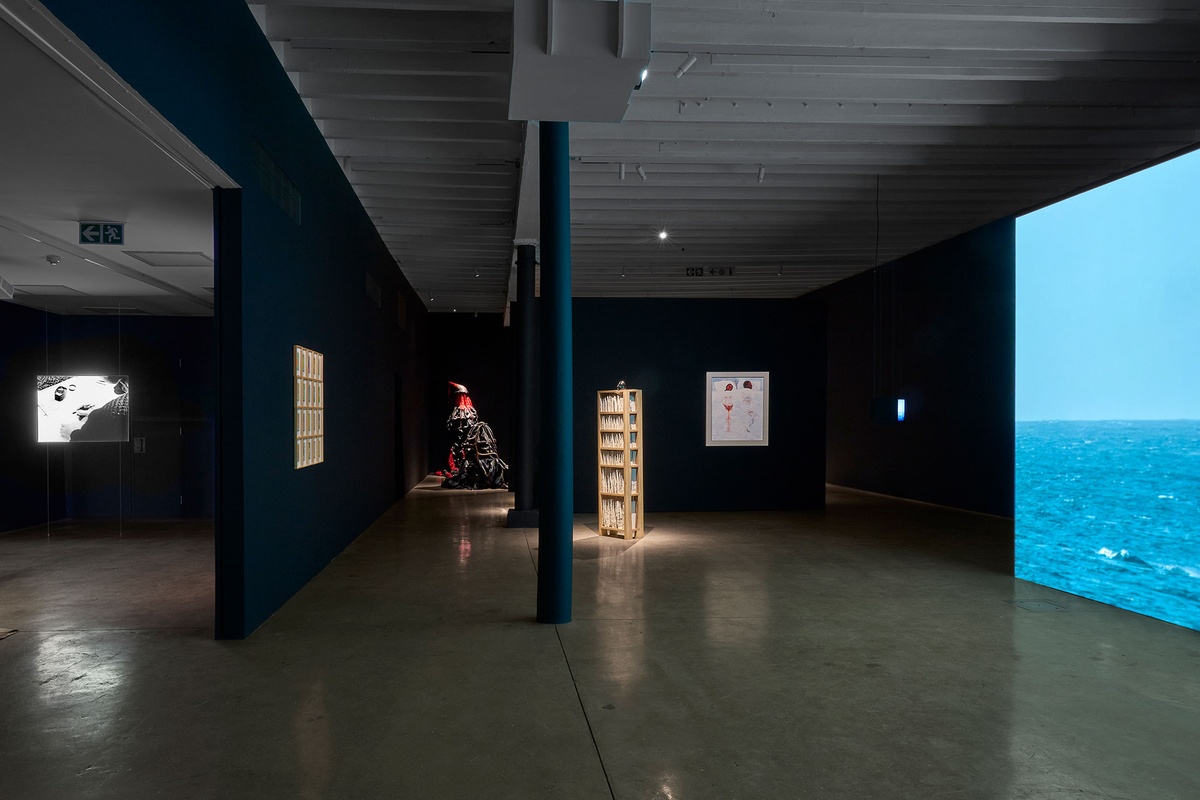
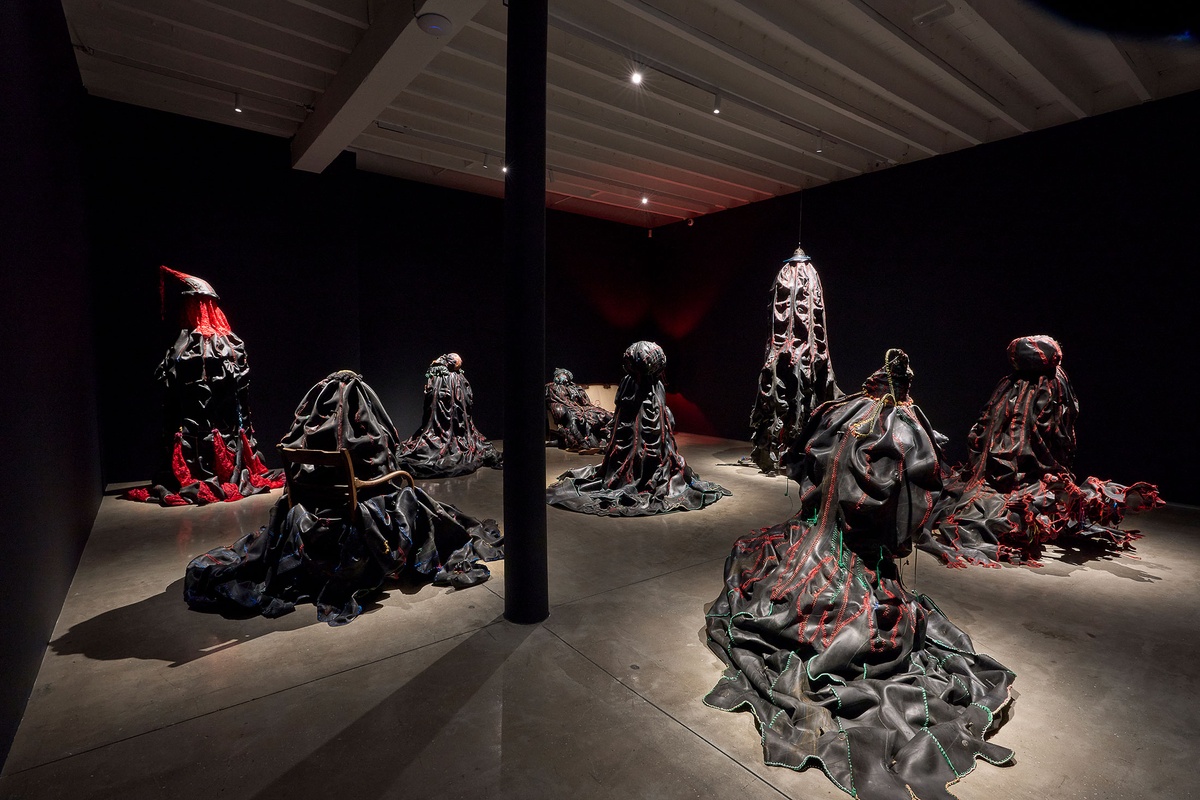
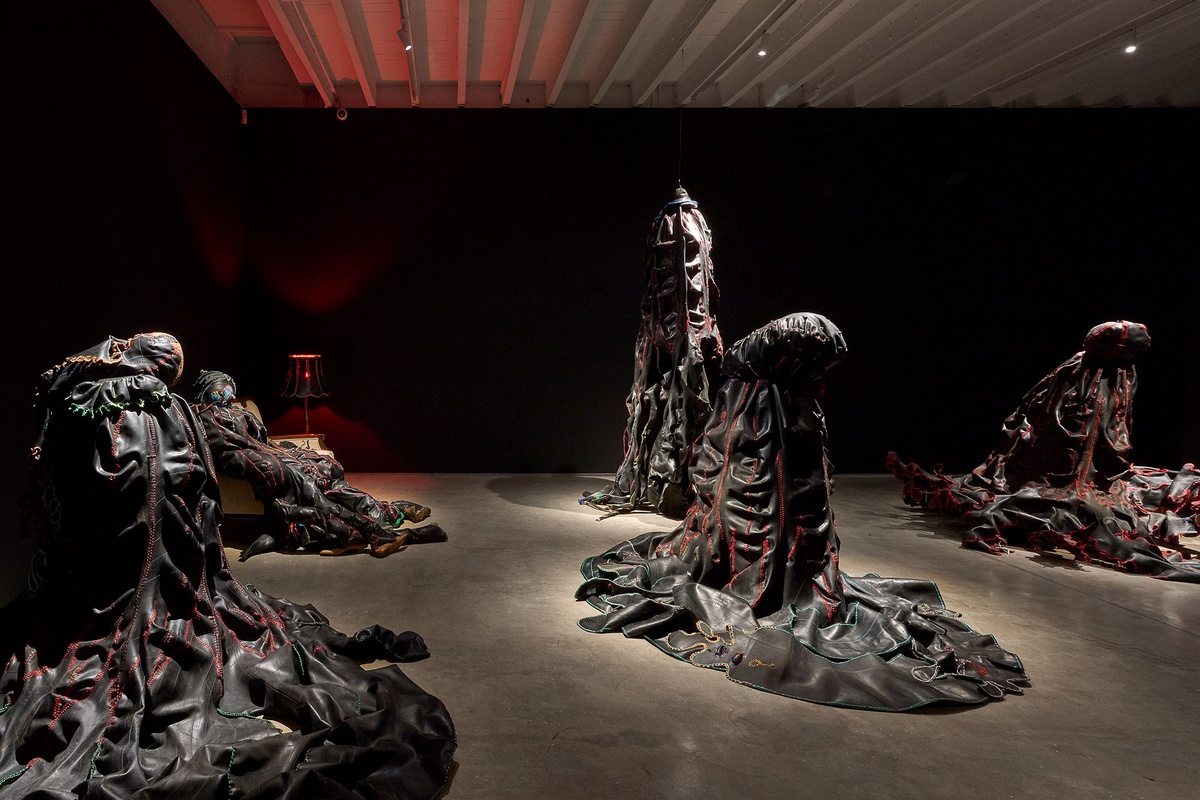
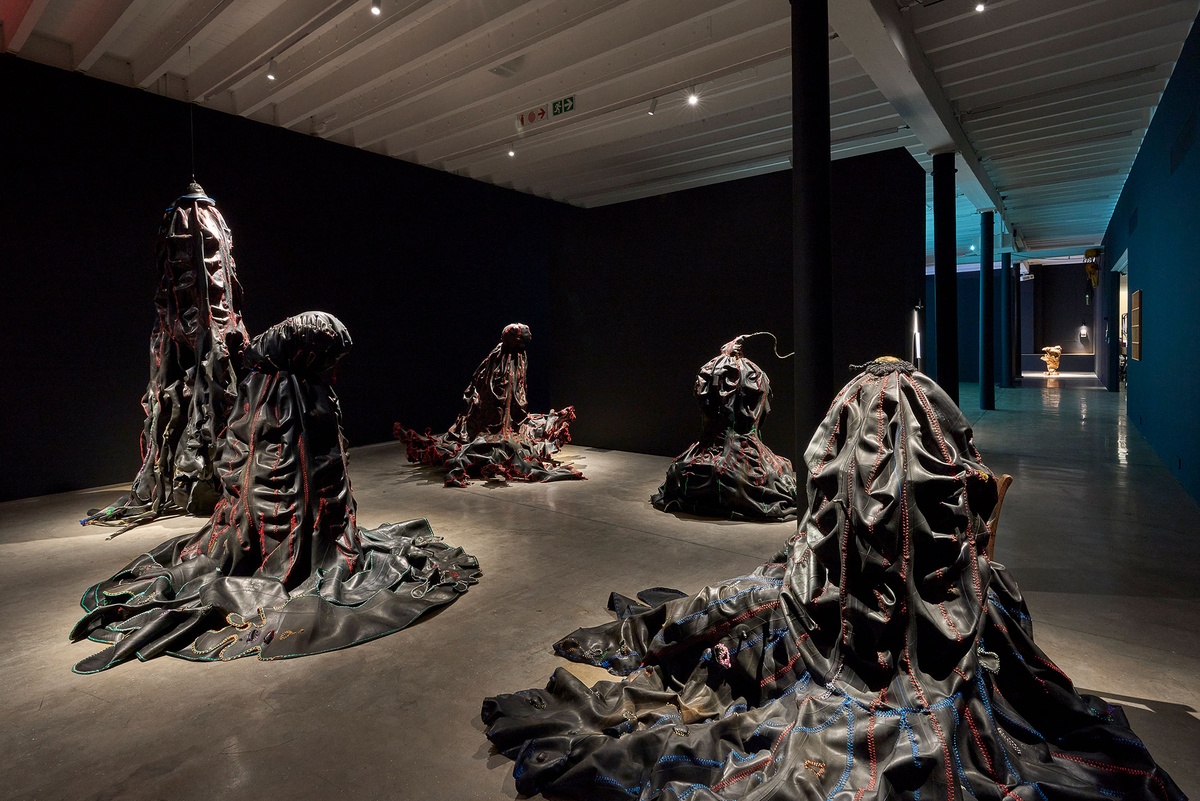
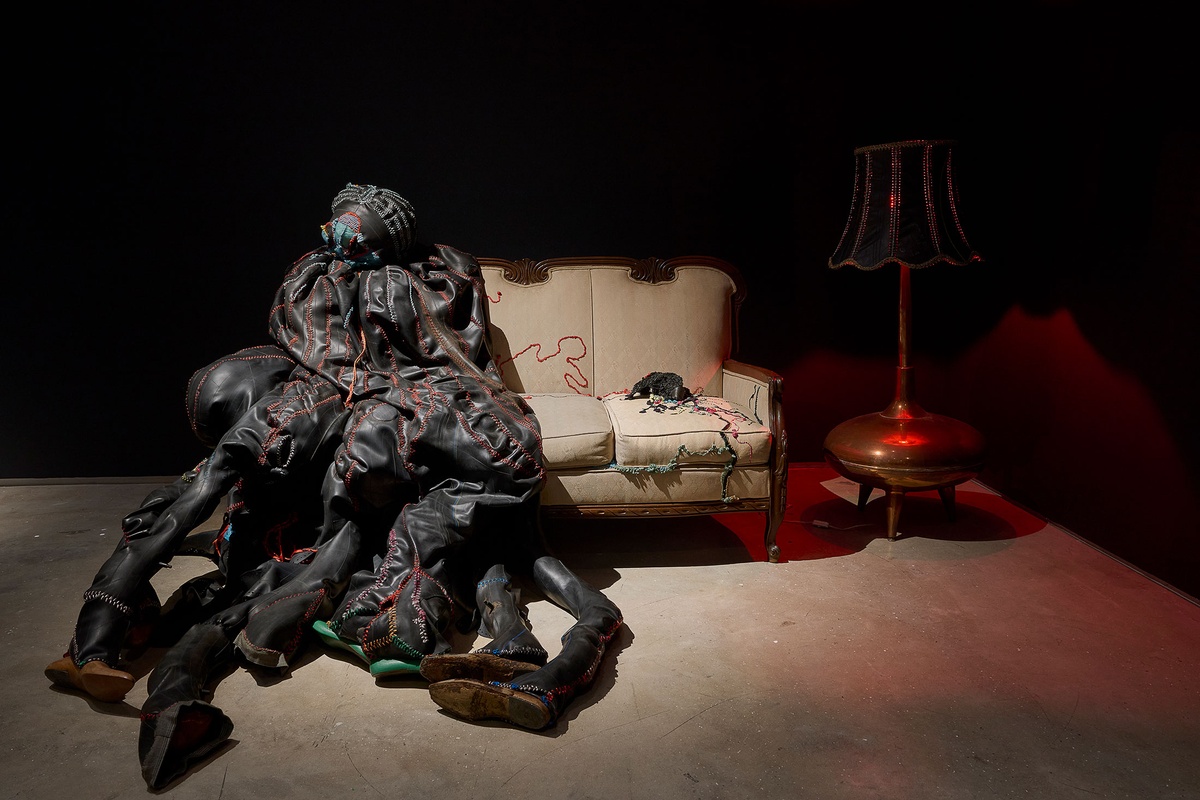
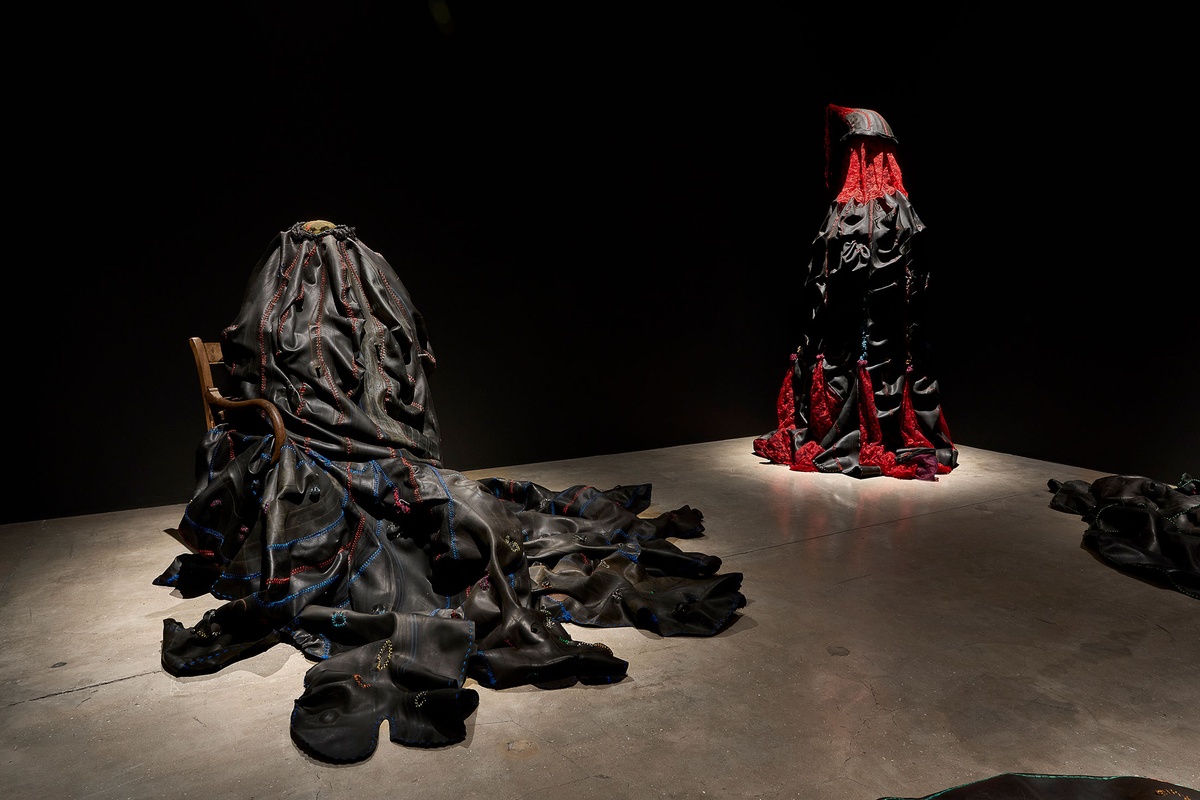
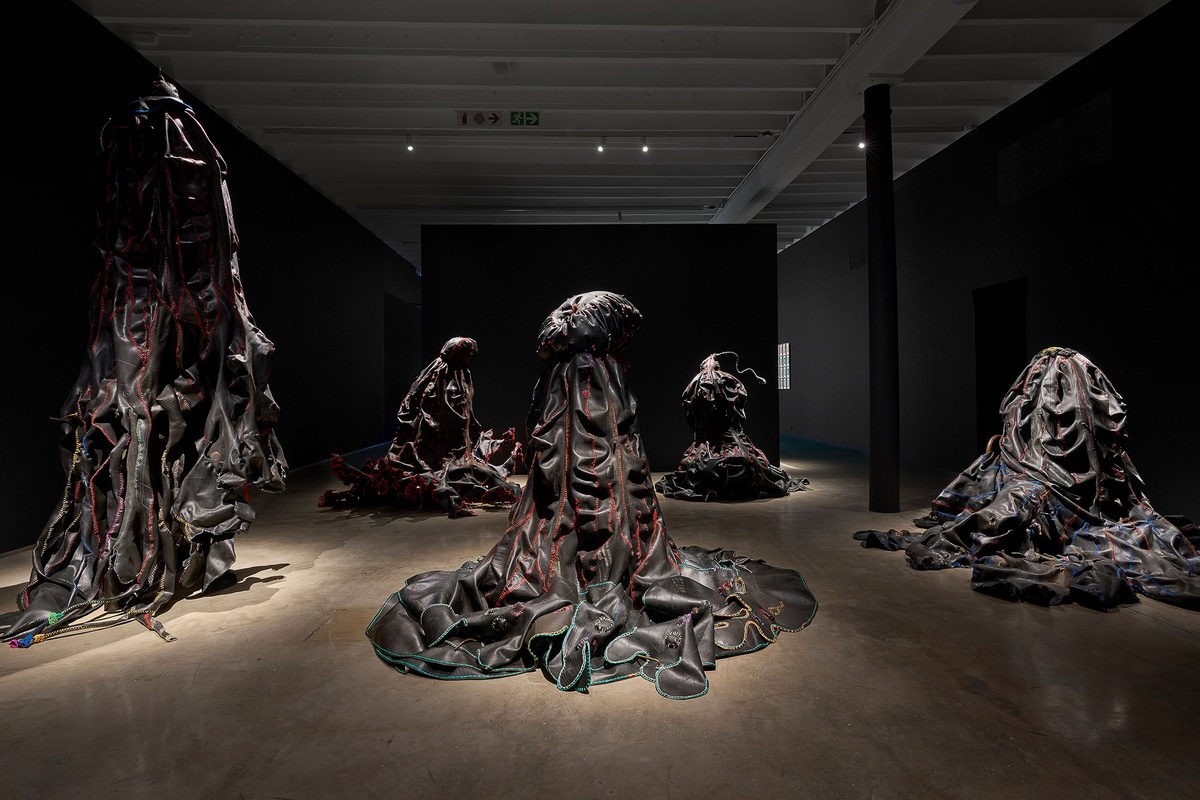
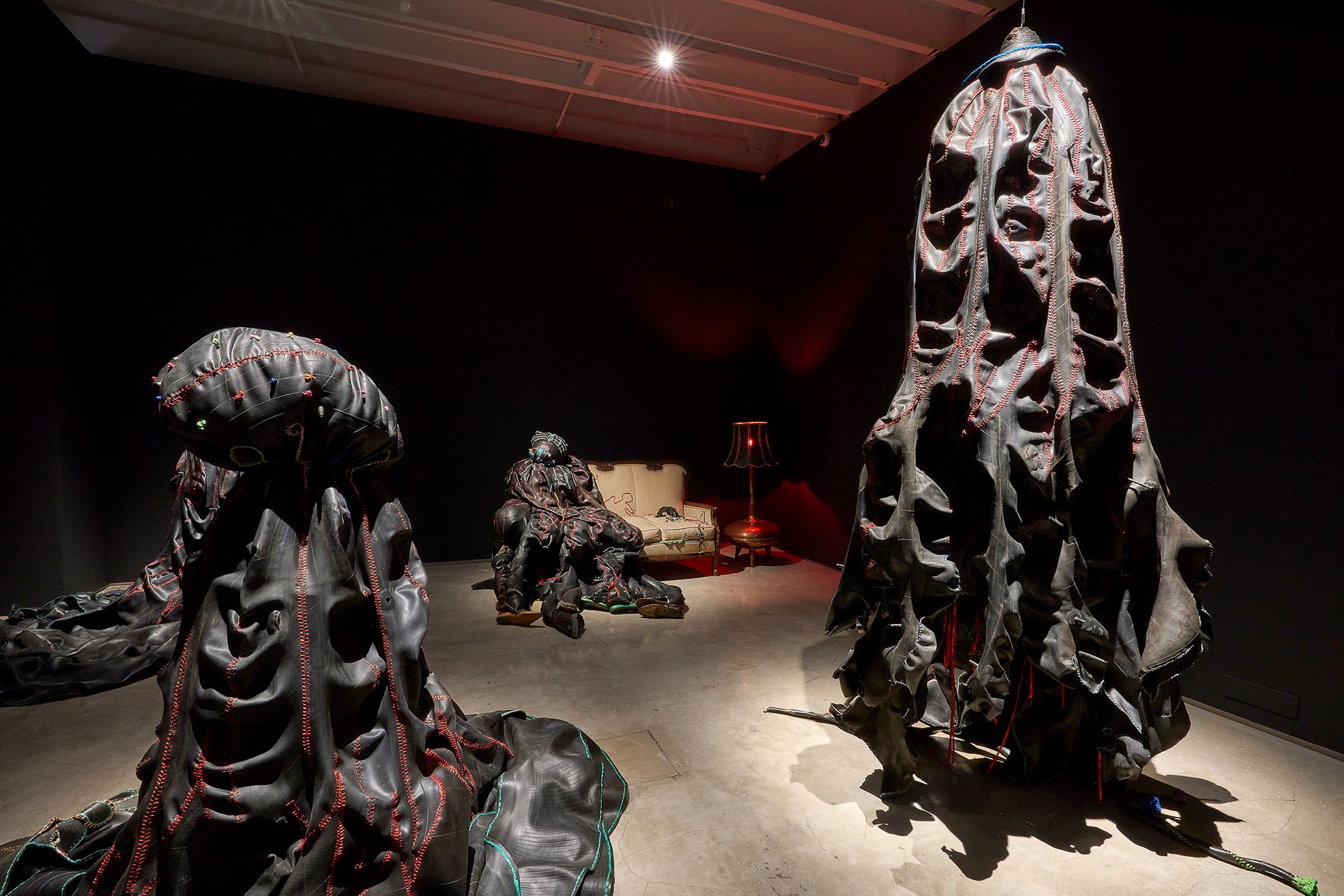
Izithunzi (trans. The Shadows), the artwork that earned Hlobo the 2009 Standard Bank Young Artist Award for Visual Art, stages eight amorphous figures performing a theatrical reimagining of umtshotsho, a traditional Xhosa coming-of-age party that allows for youthful curiosities about adulthood to be explored. Hlobo weaves desire, transformation, and sexuality into this moment of suspended performance: bodily innuendos frozen in gesture and the music stilled. Satin ribbons sewn into the dark exoskeletons of these ‘shadows’ are allusive of queer adornment. Using these ribbons to stitch together rubber sheaths, Hlobo seeks to reconcile his cultural belonging with his sexual identity. The seam becomes both a bridge and a border – simultaneously the site of separation and connection. The phallic, bulbous figures masquerade through the party, feigning knowledge while still trying to learn. A mask that clings to the couch alongside a slouched figure has its eyeholes sewn shut – a reminder that the performance of confidence, the pretence of knowing, can be blinding. “I am looking for the source of the shadow,” Hlobo says, “but it keeps moving. The thing is moving away and I am chasing it.” These words echo through Izithunzi, as the work lingers in the pursuit of the shifting edges of self.
b.1975, Cape Town; works in Johannesburg
Nicholas Hlobo is an artist of rare dexterity. In turn monumental and intimate, heavy and weightless, his works evade the themes ascribed to them, resisting facile explanation. Their titles only augment their uncertainty. Some read as unclear warnings – Zophalala futhi (trans. They will fall apart again), Unojubalala (trans. She is pale) – others incline towards the metaphysical: Izithunzi (trans. The Shadows), Isisindo samadlozi (trans. The weight of the ancestors), Uvuko (trans. Resurrection). Hlobo moves fluently between performance, installation and painting (the imperfect word he uses for his hybrid works on canvas). In each, there is a tactile engagement with material – be it rubber, leather, copper wire or ribbon. For the artist, these constituent parts are metaphorically charged, extending beyond their physical bounds. Assembled together, they become anthropomorphic abstractions; no longer threads and substrate but veins and skin. “In truth,” Hlobo says, “we’re all cords, plugs and connecting points; some split, some broken. Yet the body mends itself, the body continually grows. It’s a never-ending process, it’s a progression – and the mind does the same.”