Santu Mofokeng
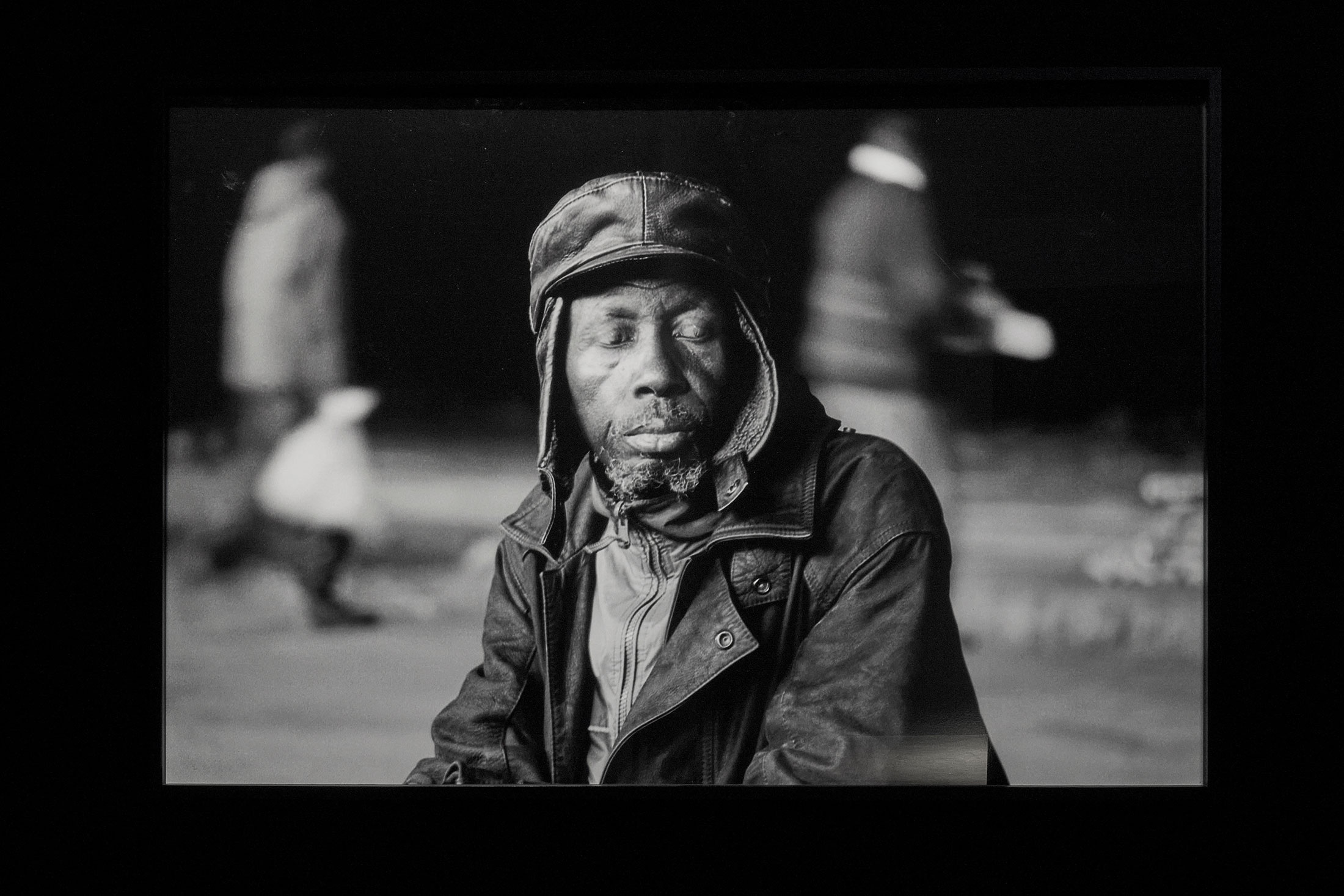
Of the series of photographs to which this work belongs, Santu Mofokeng wrote in 1997:
They are strewn like litter across the floor in my office. Others are kept in cabinets, and a few are in frames. Whatever lies, deceptions or promises brought them into being, I wonder. I am referring to the products of my gaze, refracted and reflecting, somewhat muted, not unlike light dancing on the surface of the dirty puddle that is my memory: Images of people in moments of contemplation, performance, confrontation and perhaps celebration. My exploration and participation in the fictions we call relationship and community. And of environments, real and imagined. Insignificant experiences, selected and isolated from tedium, moments reduced to mere appearances, simply as surfaces reflecting light, arrested and stored in the long memory of film. A brooding corpus of so many episodes remembered and forgotten.
These ‘products of his gaze’ would only multiply across the coming decade, Mofokeng returning time and again to Motouleng Cave in the Free State, a site significant to the syncretic spirituality in which he was raised, a union of traditional customs and Christianity. The resulting photo-essay, Chasing Shadows, details the photographer’s often-fraught engagement with the faith he inherited. “I still try to avoid being trapped in its hypnotic embrace, which seems to mock my carefully cultivated indifference and self-confidence. I feel ambivalent about my ambivalence, embarrassed at my embarrassment.”
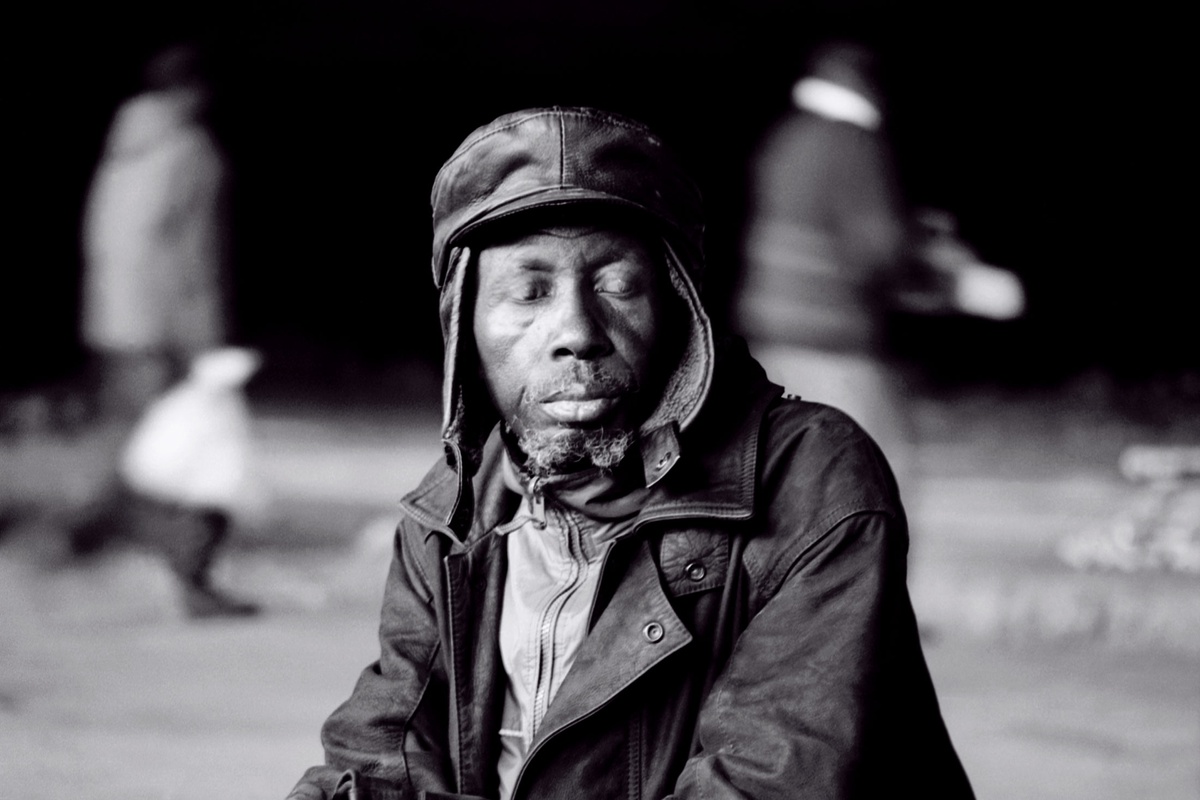
Mofokeng’s uneasy preoccupation with the invisible realm is perhaps most eloquently distilled in this portrait of his brother, Ishmael, who returns the camera’s gaze with unseeing eyes. Behind him in the darkness of the cave, figures are reduced to painterly blurs and brushes of light, made insubstantial and otherworldly. A traditional healer, Ishmael believed he suffered not from the virus to which he would succumb but a curse against which he was ultimately protected. He avoided naming the illness that ravaged his body, refusing all conventional treatment. By the time he sought healing at the cave, any denial was undermined by an acute secondary infection. As Sean O’Toole recounts of the brothers’ pilgrimage in 2004 when this portrait was taken, Ishmael, unable to walk up to the cave, was pushed in a wheelbarrow by Mofokeng. There, the dying man “was fortified by the immensity of his encounter with tradition.” Ishmael made the return journey on foot, momentarily restored. Mofokeng, perhaps resenting his brother’s blinkered denial of his disease, wrote in the days preceding his death: “Now I am carrying an emaciated Ishmael to hospital. I know this is the last time I will see him alive… Hospitals are properly places of deliverance.” Ishmael never admitted, not even to Mofokeng, that he had HIV/AIDS.
b.1956, Soweto; d.2020, Johannesburg
“I am interested in the ambiguity of things,” the late photographer Santu Mofokeng wrote. “This comes not from a position of power, but of helplessness.” In many of his pictures, this ambiguity appears as a spreading opacity, a diaphanous pall of rising smoke, mist or dust. Mofokeng grew up, he wrote in his photo-essay Chasing Shadows (1996–2006), “on the threshing floor of faith…and while I feel reluctant to partake in this gossamer world, I can identify with it.” An agnostic observer attuned to the spiritual lives of others, the pervasive haze that softens so many of his pictures more often takes on a poetic significance. There is to all Mofokeng’s works a distinct quietude – the artist looking not to political drama but to life’s minutiae, those “things I ordinarily do or see.” The tumult of the times, Mofokeng believed, need not be made explicit in photographs. Rather, he suggested, “the violence is in the knowing,” latent in the very places and people he pictured. “His voice, his awareness of where he was in space and history, his ability to think around what he was doing,” Joshua Chuang said of the artist in conversation with Sean O’Toole at A4, “wasn’t predictable but open and raw and simultaneously hidden.”