Margaret Bourke-White
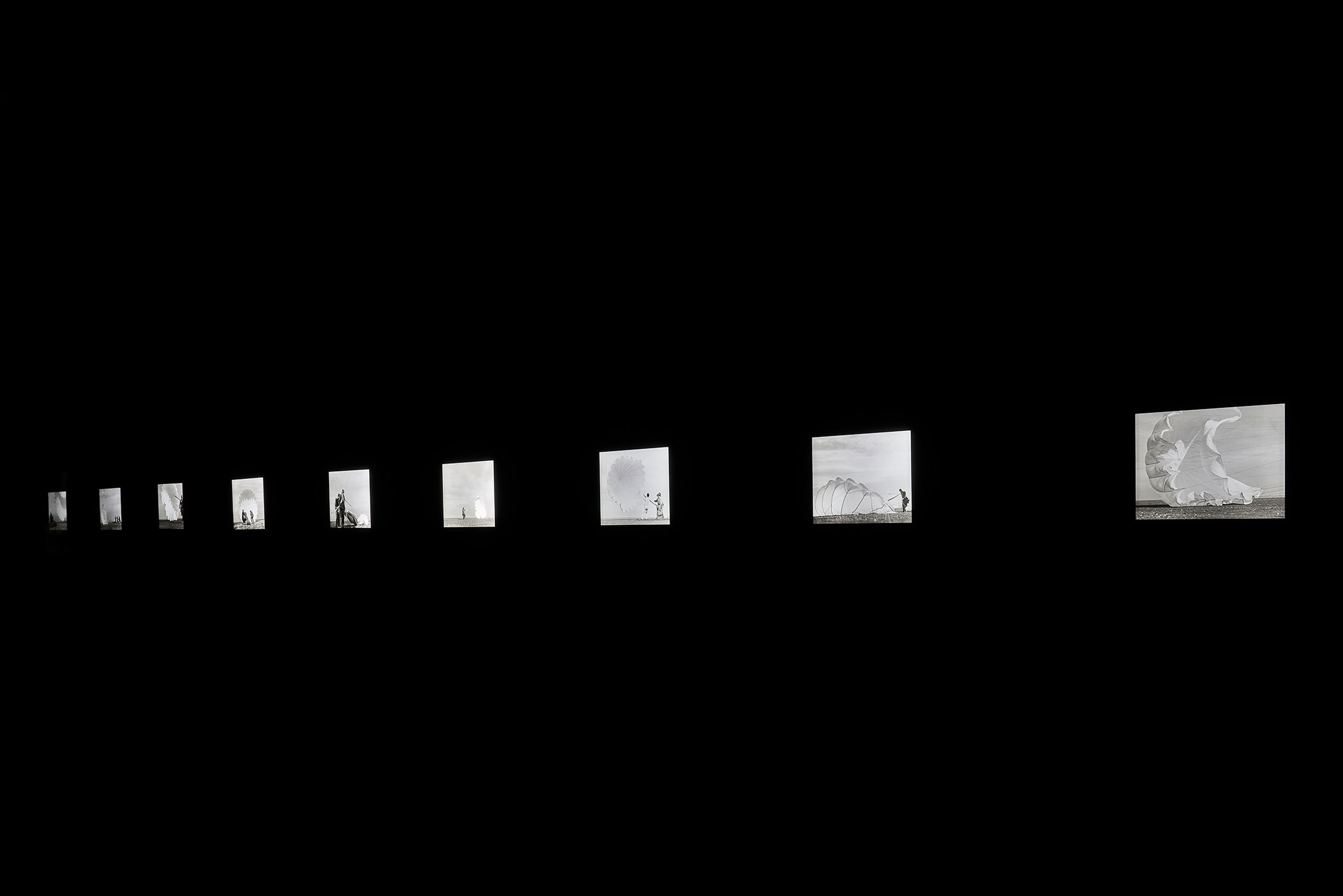
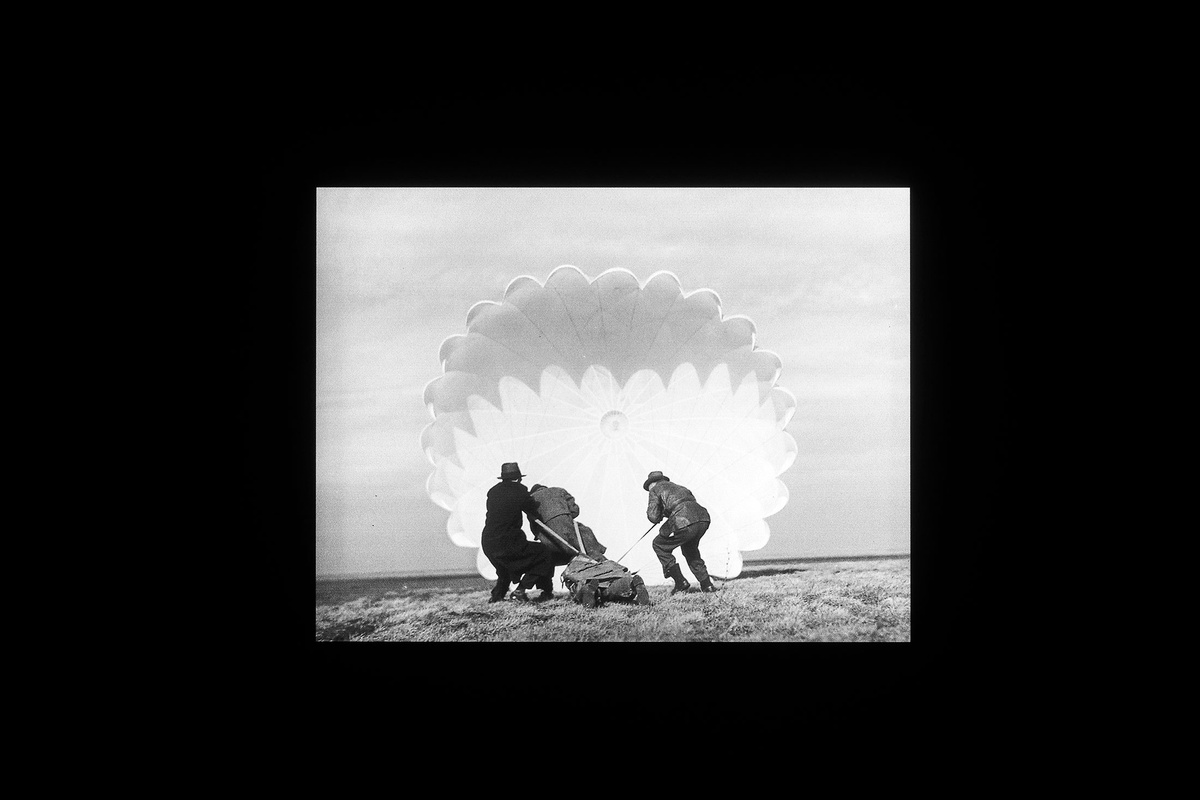
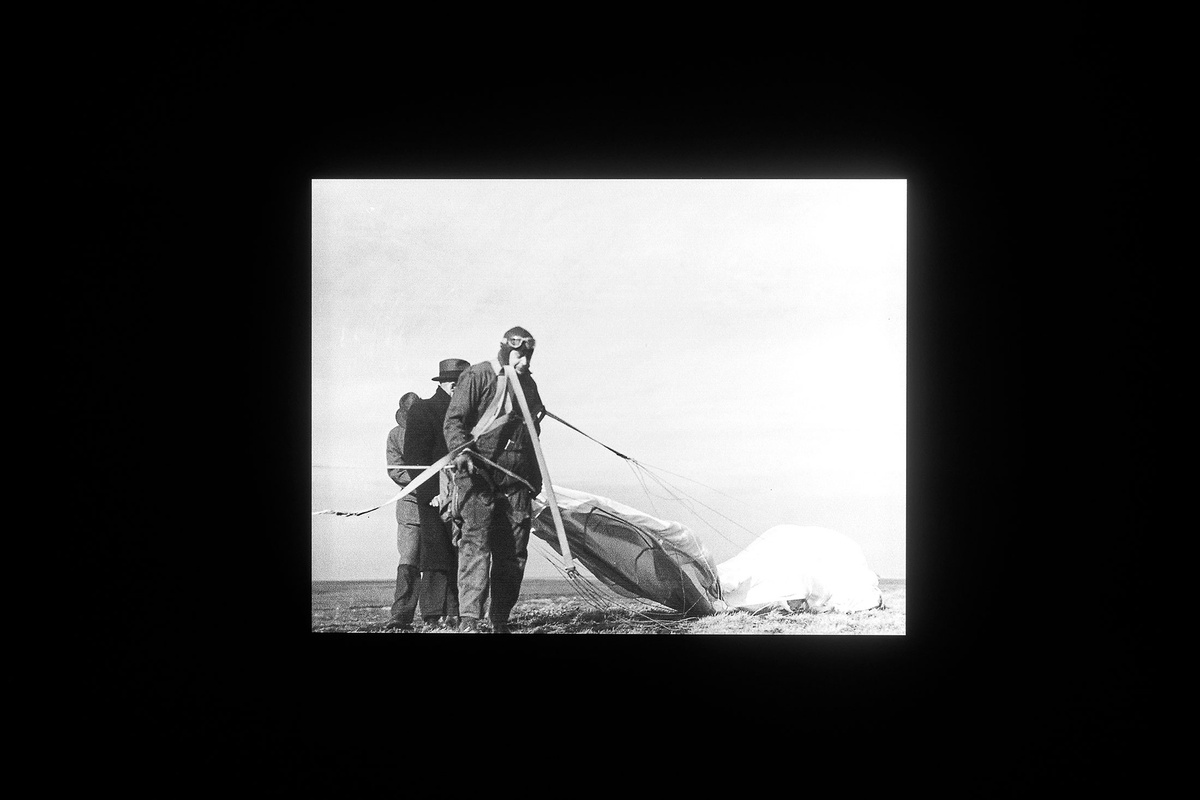
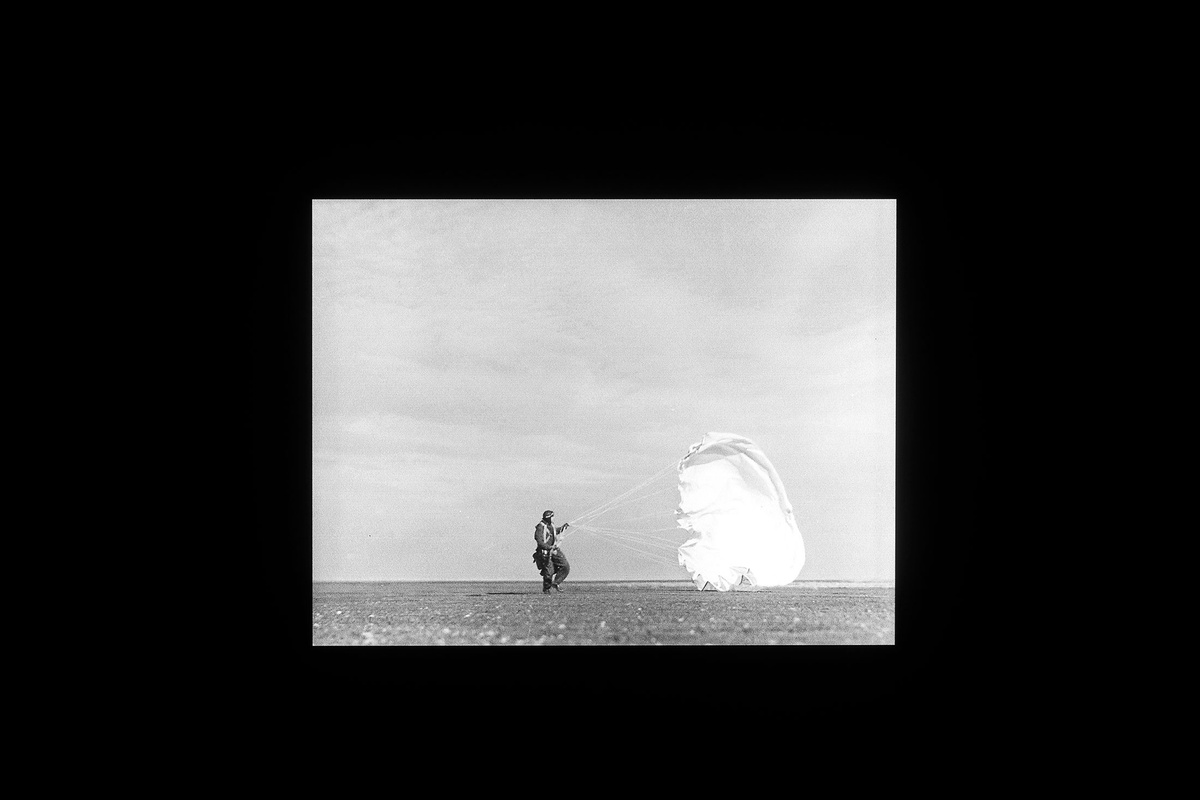
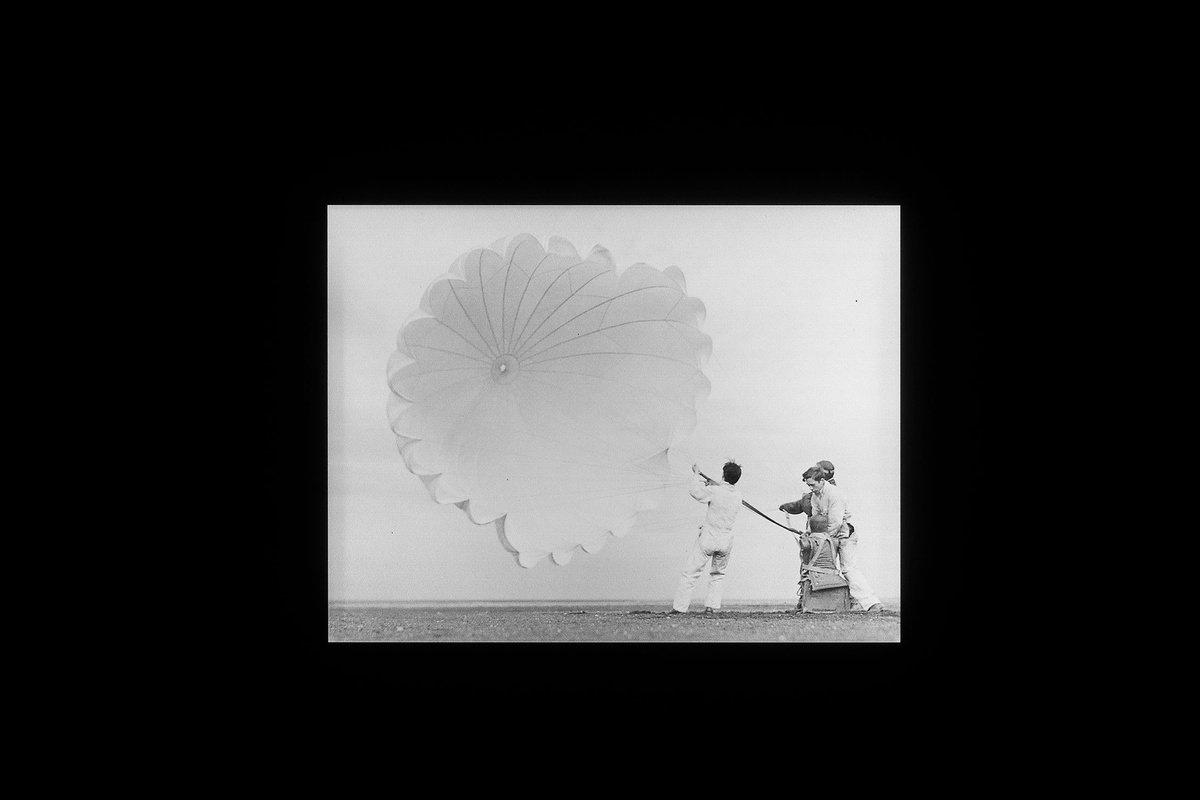
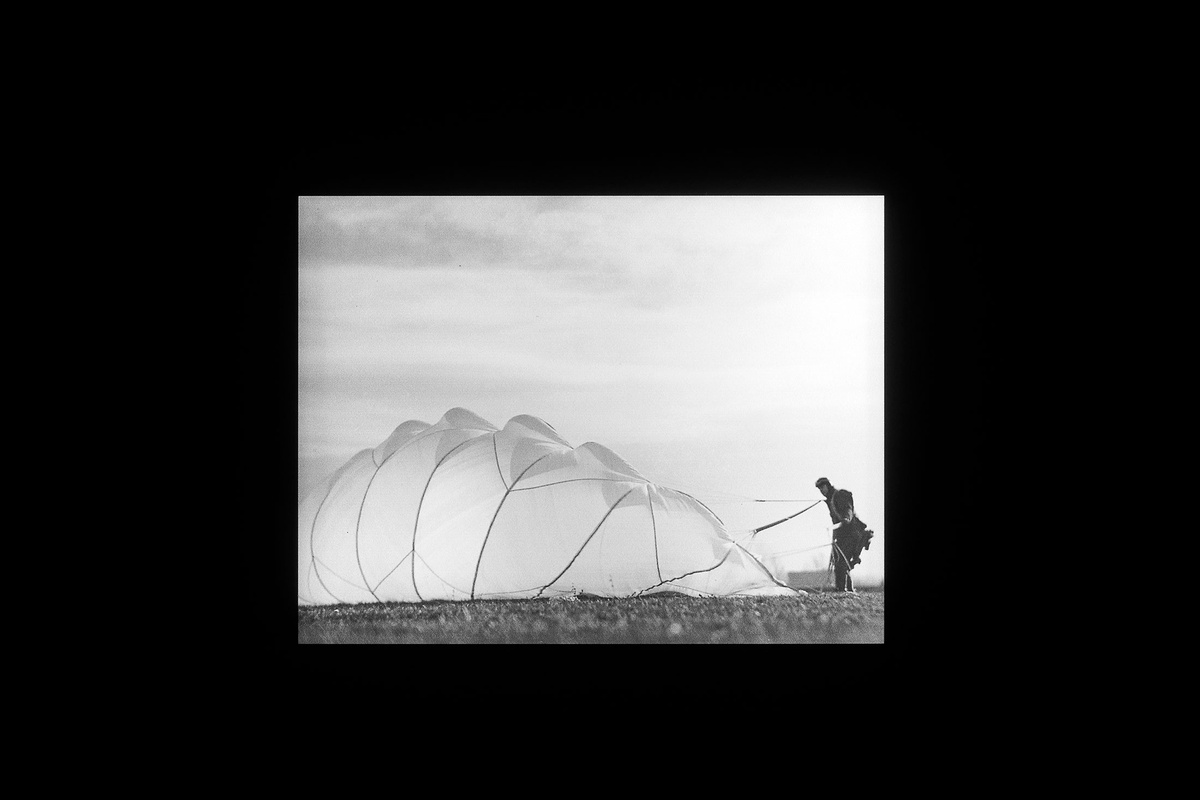
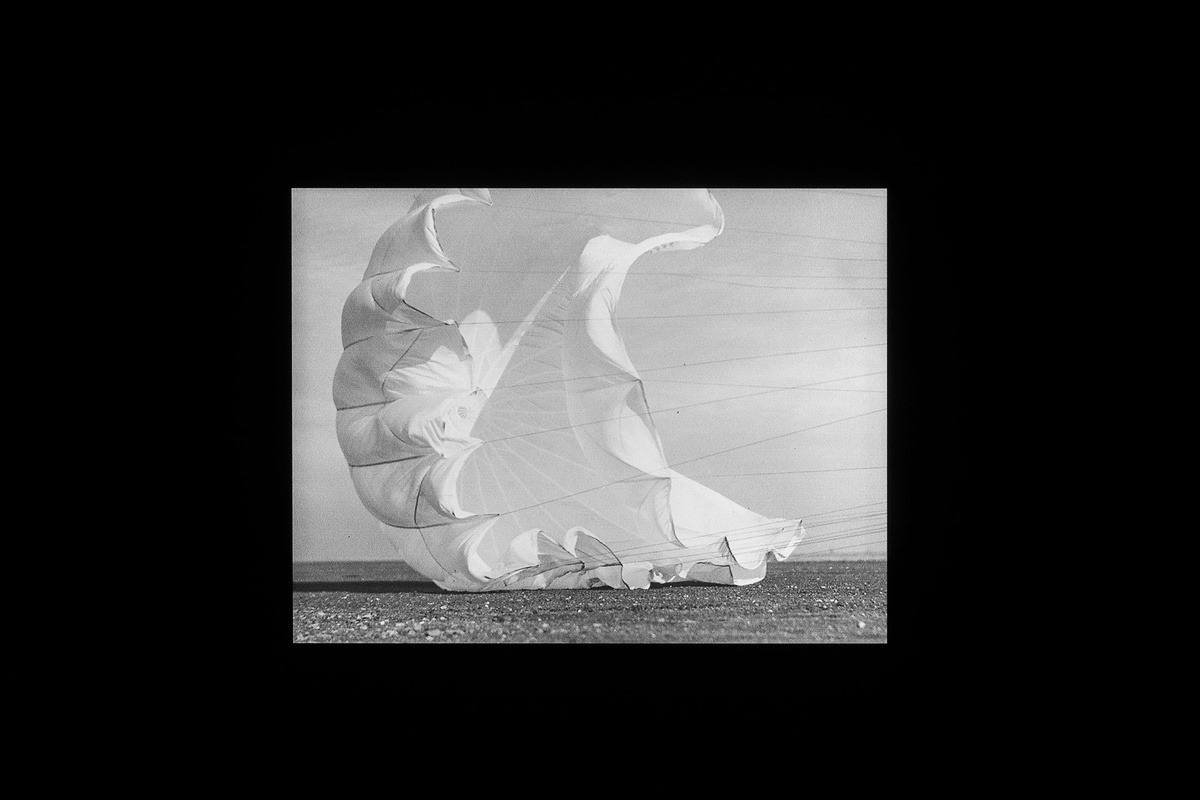
The series of photographs from which these nine exposures are taken was originally commissioned for a LIFE magazine feature on Irving Air Chute Co.’s parachutes. Aside from drily describing the patented design and listing sales and profit numbers, the article – which reads like a long-form advertisement for the company’s silk products – makes no mention of why the American-made parachute was in such high demand globally. The year is 1937: Europe is beginning to rearm, the Soviet Union is militarising, wide-scale conflict on the continent seems imminent, the Second Sino-Japanese War is three months away, and the Spanish Civil War continues. The United States, having recently passed the Neutrality Act, remains officially isolationist, however watchful of the world’s shifting alliances. This perhaps accounts for the article’s pointed silence on the subject.
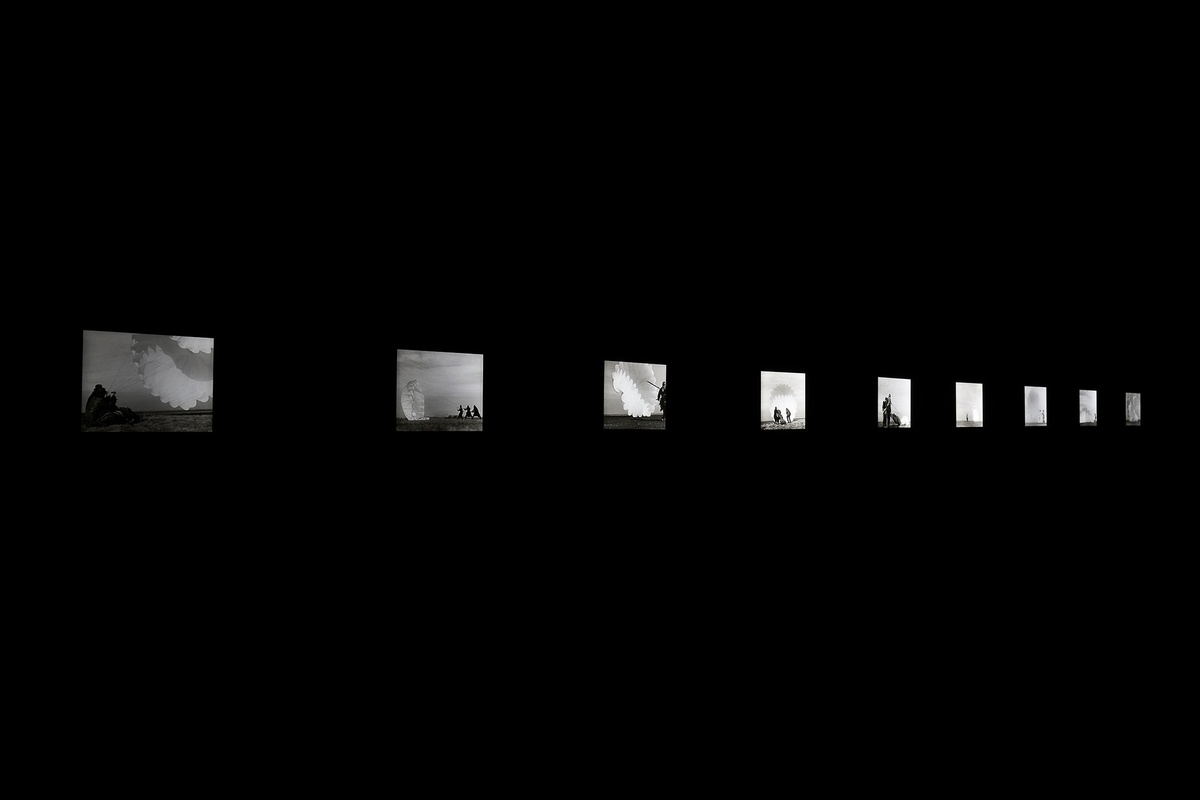
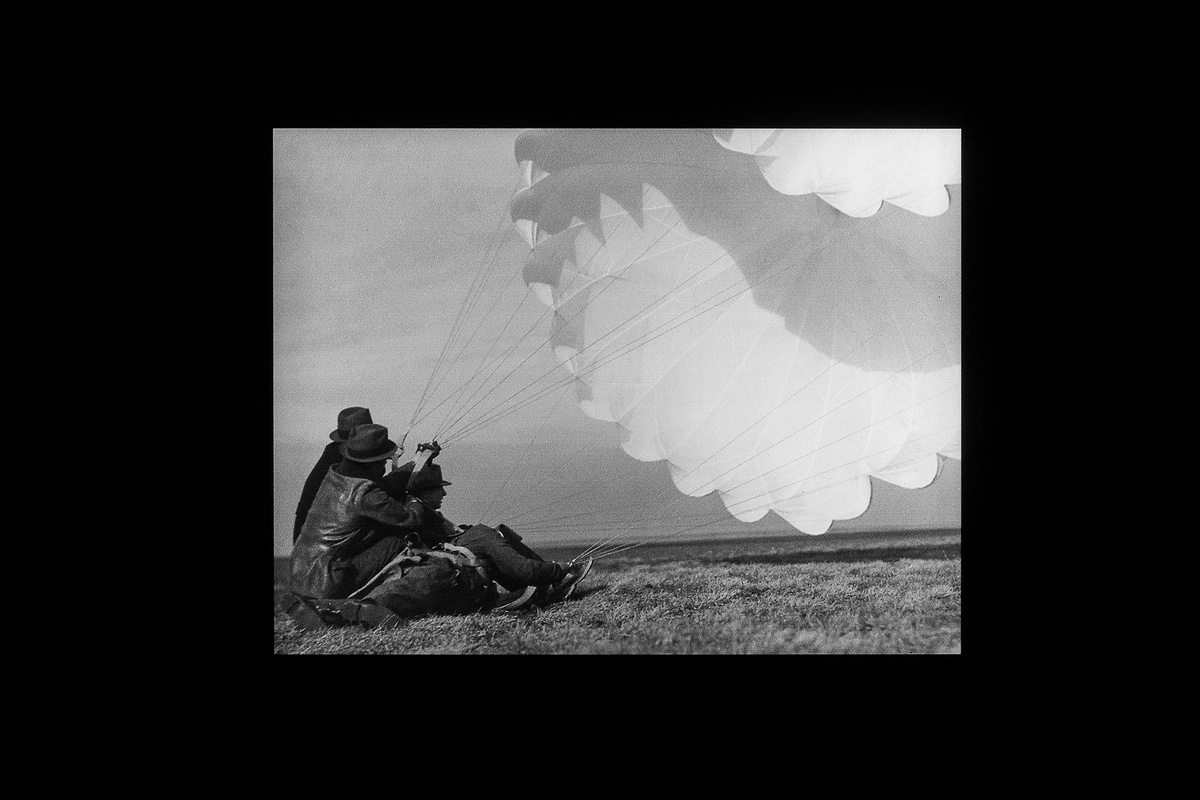
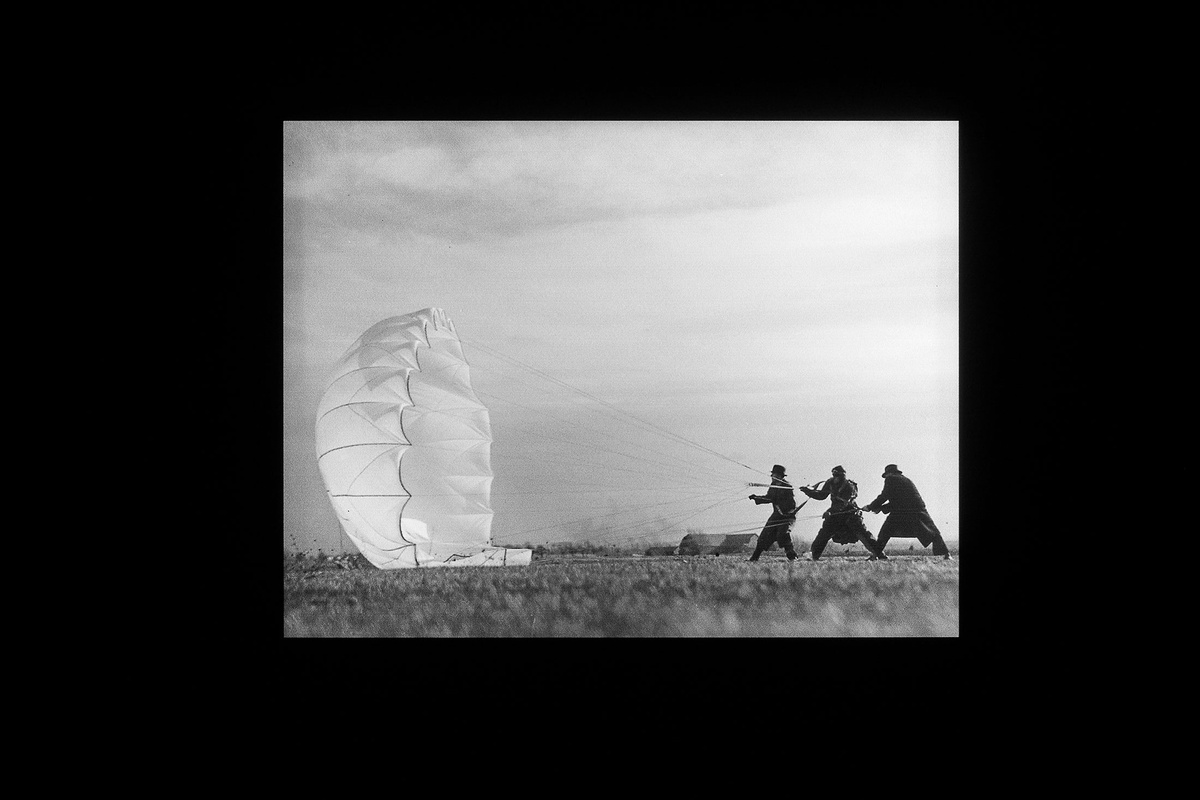
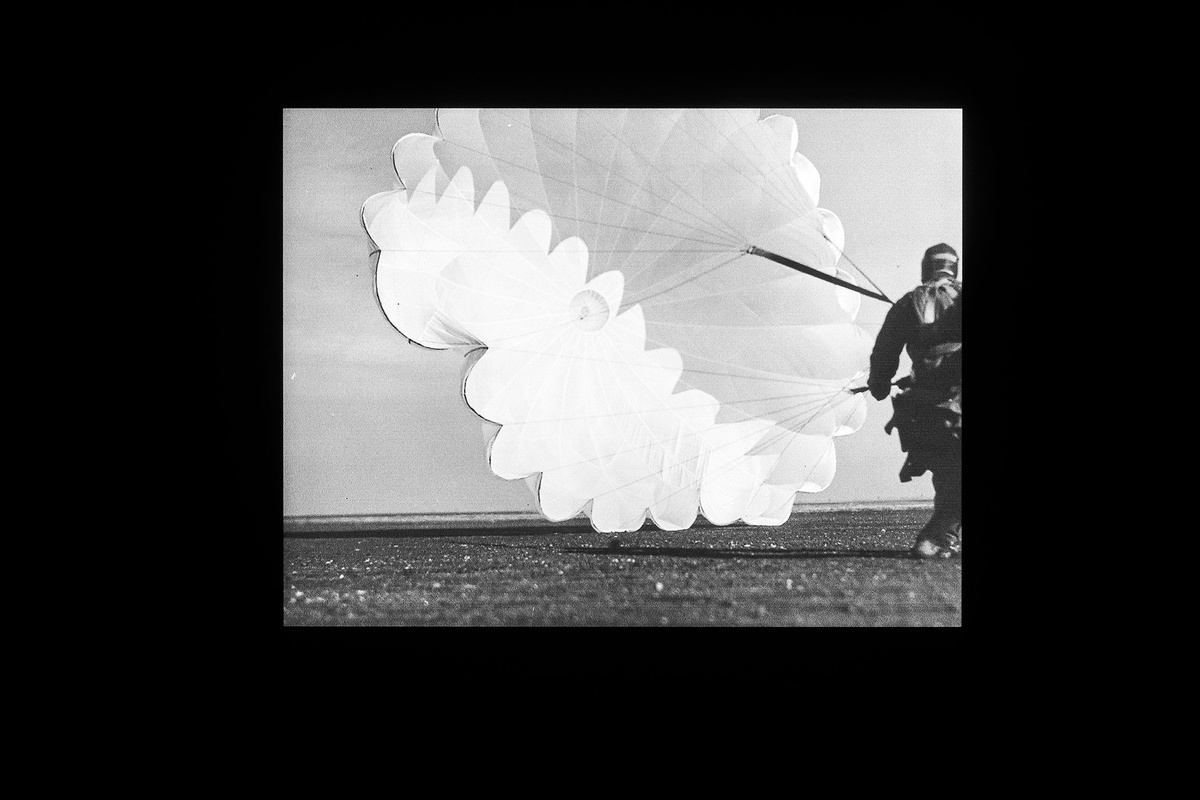
Only two of the photographs Margaret Bourke-White made at the testing site in Buffalo, New York, appeared alongside the magazine copy; a third was reproduced on the issue’s cover. A larger set was later published posthumously as a slim photobook titled Twenty Parachutes (2002). Seen together and separated from the article, the photographs assume the quality of a surreal epic, playing out against an all but featureless landscape. In them, men struggle against the invisible wind, their parachutes billowing in the stiff breeze. A test-dummy torso adds to the dreamlike feeling of the pictured scene, the truncated figure a discomfiting non-sequitur in the photographs’ otherwise striking formalism. Seen from a historical vantage, the images appear to anticipate the coming storm.
The photographs are presented here as nine discrete lightboxes, recalling the original exposures’ celluloid transparency.
b.1904, New York; d.1971, Stamford
Margaret Bourke-White’s career was one of firsts. Widely credited with pioneering the photo-essay as a journalistic form, she was the first staff photographer for Fortune in 1929, producing the lead story for its debut issue, and the first foreign photojournalist permitted to document Soviet industry while on assignment for the magazine the following year. In 1936, she was one of the first four photographers hired at LIFE, again producing the debut issue’s cover image. During the Second World War, Bourke-White was the first accredited woman photographer, the first authorised to fly on combat missions, and the only Western photojournalist to document the German invasion of Moscow in 1941. She was also among the first to picture the Buchenwald death camp shortly after its liberation in 1945. She would go on to document some of the most seismic events of the 20th century, including the partition of India and Pakistan (she was the last to photograph Gandhi, some six hours before his assassination), the Korean War, and the institution of apartheid in South Africa.
Though Bourke-White’s earliest subjects were architecture and modern machinery, photographed with a starkly graphic style, social-issue commissions refocused her lens on human experience. Yet she maintained a distinct sensibility that set her images apart from straight reportage, the clarity of her compositions lending them their iconographic weight. Indeed, many of the photographs she made have come to stand as the defining image of the historical events and people pictured.