Yu Nishimura
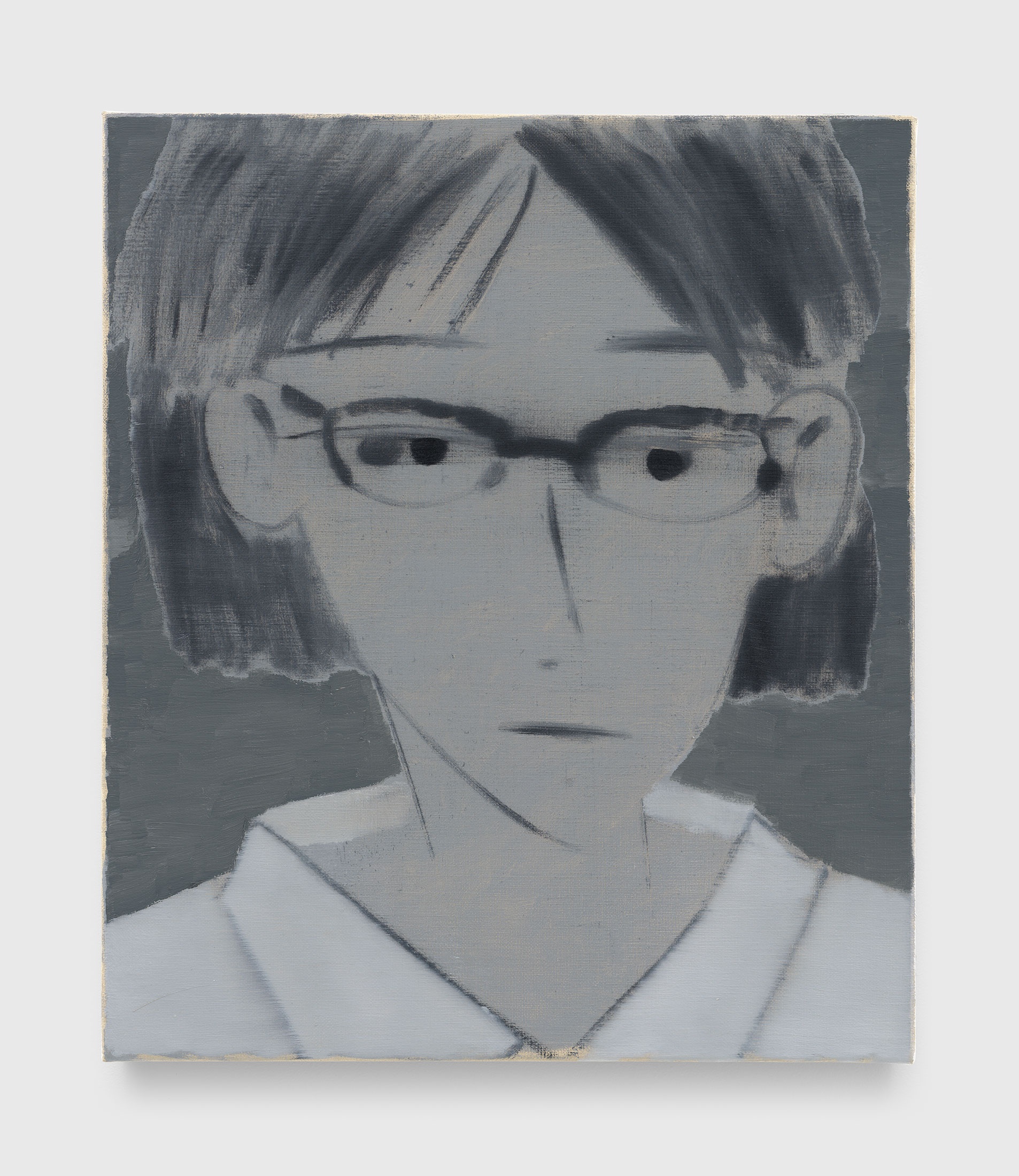
Given in spare outline, Yu Nishimura’s close-cropped portraits are studies in imagined personhood. Each figure, like that in A Girl with Glasses, appears preoccupied with an interior life; each is possessed of a particular quality of self. “The people aren't real exactly,” the artist suggests. “I see each portrait as a representation of a fictitious character.” He continues:
I have a lot of group and family photos in my studio's research archives. There are graduation albums, old amateur photographs, even photos from before the war. Some photos of company executives, that kind of thing, all of which I've found in flea markets and secondhand bookstores and cut from magazines. But when it comes to making the paintings, I don't rely on the photographs. I work freehand from memory and with the hope that in the end I can bring out some humanity.
Nishimura’s characteristic dry-brush blurring and other such overworking of the painted image transcribe the texture of these recollections, with their imperfections and inventions.
b.1982, Kanagawa; lives in Kanagawa
With their overlapping and often misaligned layers, Yu Nishimura’s compositions appear suspended in a filmic crossfade, dissolving into an intervening scene or resolving into clarity. The effect is reminiscent both of movement and of memory, the blurring of his images expressive of time’s passage. A sense of impassable distance between viewer and subject is common among the artist’s works, as is one of muted quiet. Citing anime and postwar Japanese social photography as his primary influences, Nishimura’s stylised, graphic figuration is paired with impressionistic renderings of real and remembered landscapes. Temporality, fluidity, the mutability of oil medium and mind’s image – of these associations with his work, he writes:
I think it's trying to bring reality to something ambiguous or something that seems to be visible but isn't. It's like that moment when you wake up from a dream and don't really understand what happened, but you can still have this feeling of the dream being very real and tactile and raw. I think capturing this unnameable experience is the role of painting.