Noah Davis
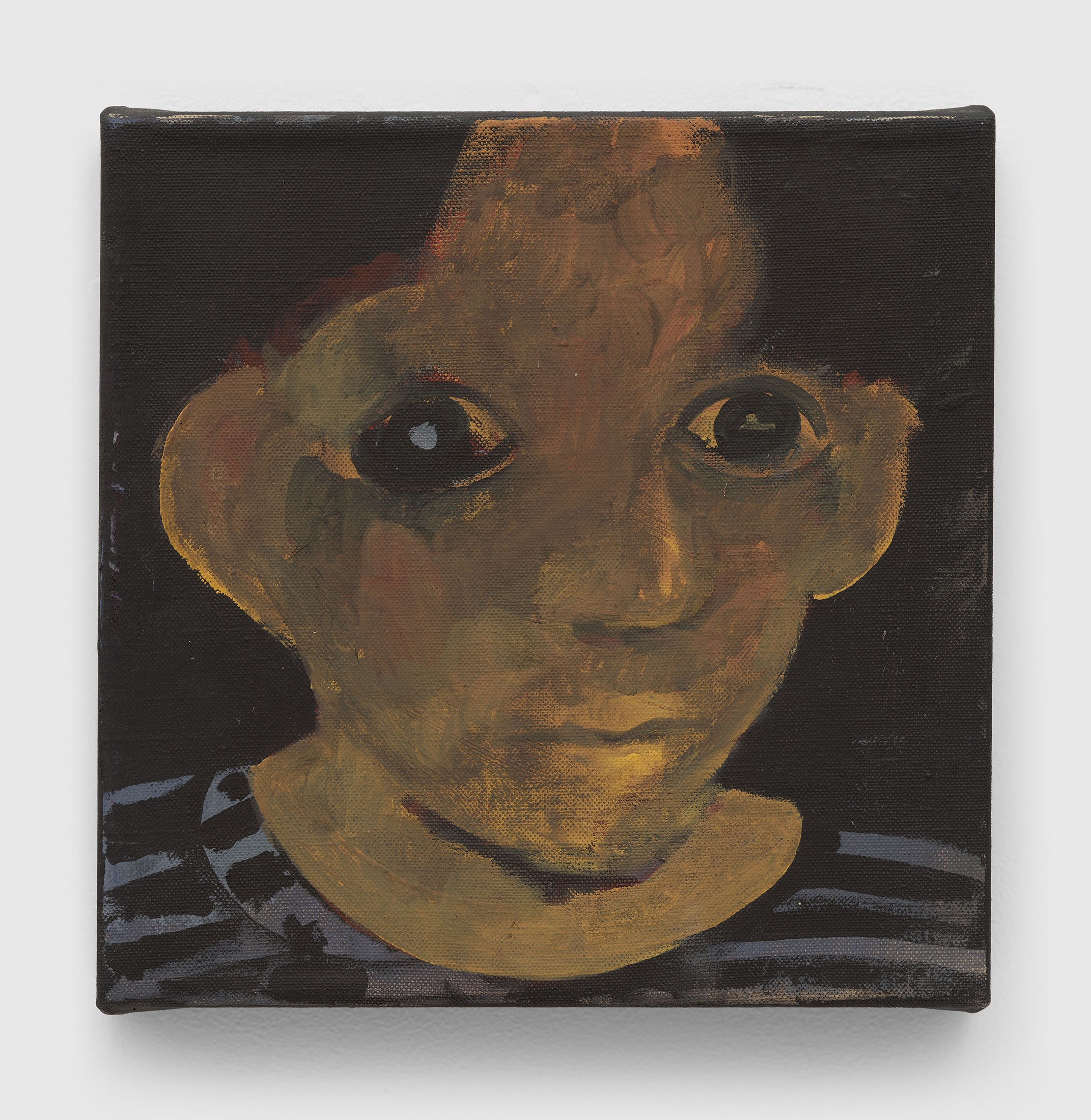
Hidden, suggested, overworked, realistically transcribed or rendered as exaggeration, the faces in Noah Davis’s compositions are differently articulated across pictorial registers. Where some paintings redacted their subjects’ likeness – like that of famed architect Paul Revere Williams in The Architect (2009), who is all but eclipsed beneath a spilling swathe of white – others offer only the barest description of features, or picture figures seen from behind, as in his elegiac Painting for My Dad (2011). Few, like The Early Works, are cartoonish in quality. Davis’s sources were as changeable as his style, the artist drawing inspiration from wide-ranging references: family albums, photographs sourced from flea markets, anonymous images found online, historical records, and art history, as well as remembered individuals and imagined others.
b.1983, Seattle; d.2015, Ojai
Noah Davis never settled into a mid-career sensibility – he died in 2015, aged only 32, leaving behind some 400 paintings. An apparent restlessness characterises these works, the artist pursuing different registers of figuration across his more realistic modes and surreal segues. Davis gave few interviews; his painterly preoccupations are nowhere neatly summarised. Perhaps his practice is characterised by “folk-modernism” and “magical misrepresentation”, as arts writer Walker Mimms suggests, or a figuring of black American life that extends beyond representation toward an associative encounter with experience. Or perhaps such framings serve only to circumscribe the artist’s generative inconstancy. Even his painterly techniques seem to insist on uncertainty: Davis shifted between solidity and fluidity, opacity and translucency, the precisely described and the willfully obscured. His palette was indeterminate too, at once saturated and shadowed. Of the artist’s 2024 posthumous survey, critic Zachary Fine said, “What makes it so affecting are the enthusiastic lurches in Davis’s style, as he spots one shimmering possibility for his art and then darts to another.”
In addition to his painting practice, Davis co-founded the Underground Museum in 2012, a free-to-public cultural centre in the working-class, predominantly black and Hispanic Los Angeles suburb of Arlington Heights. Initially unable to secure institutional loans, the debut exhibition at the space – titled Imitations of Wealth (2013) – featured bootlegged reproductions of modern and postmodern works made by Davis: Marcel Duchamp bottle rack, Jeff Koons vitrine hoover, Dan Flavin fluorescent lights, Robert Smithson mirrored mound of earth, On Kawara date painting. The centre’s primary aims, to bring world-class art and leading thinkers to the community, were realised shortly after the critical success of that first show. The Underground Museum closed until further notice in 2022, a decade after it opened.