Jody Brand
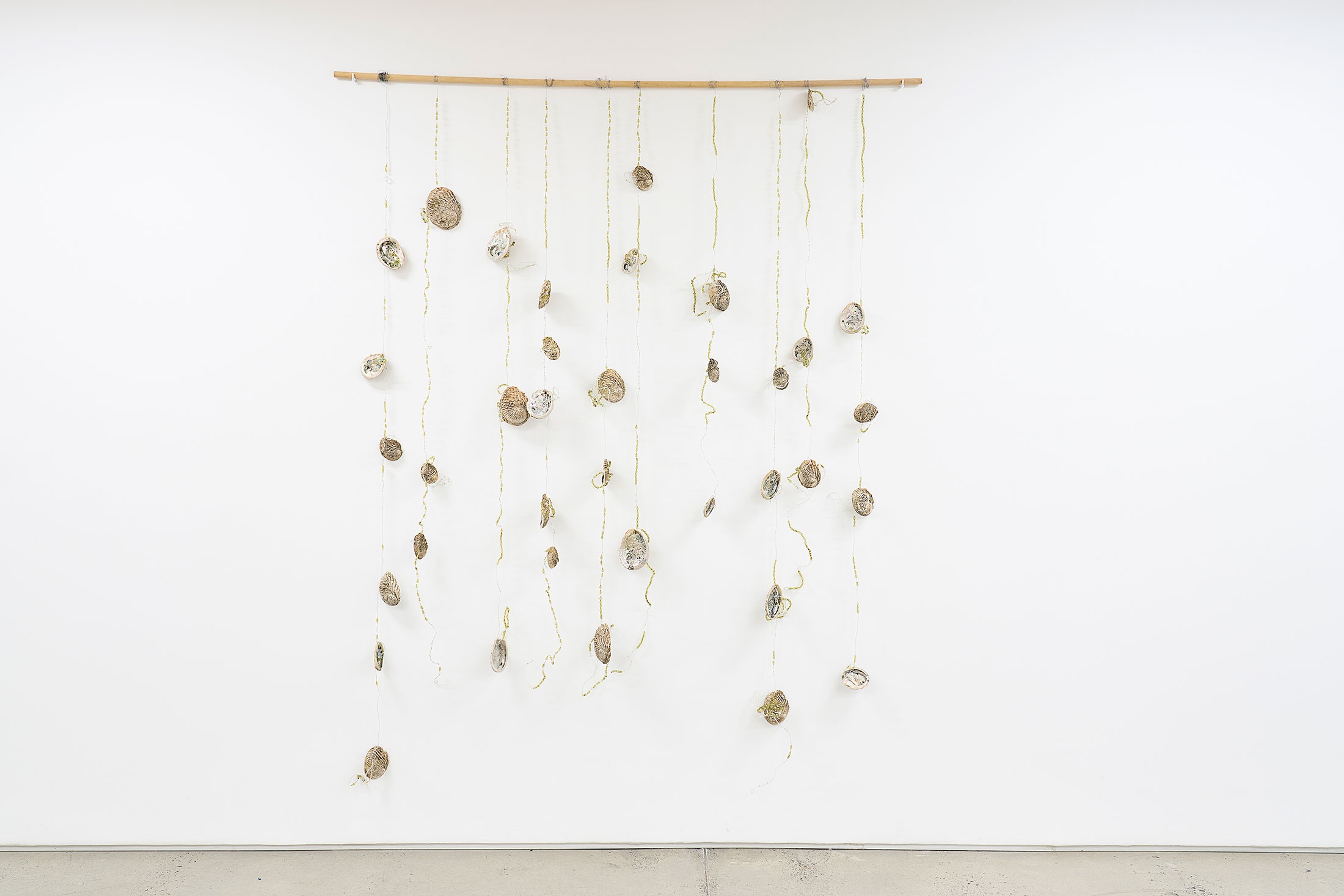
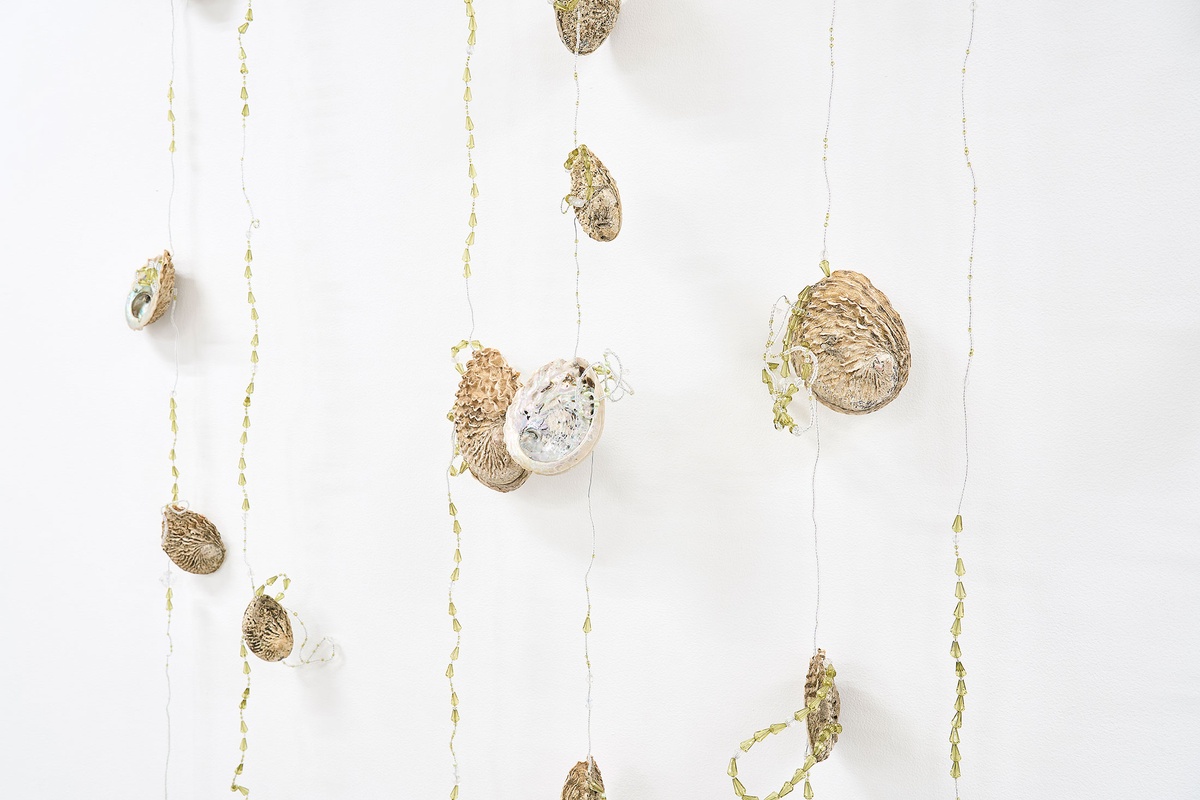
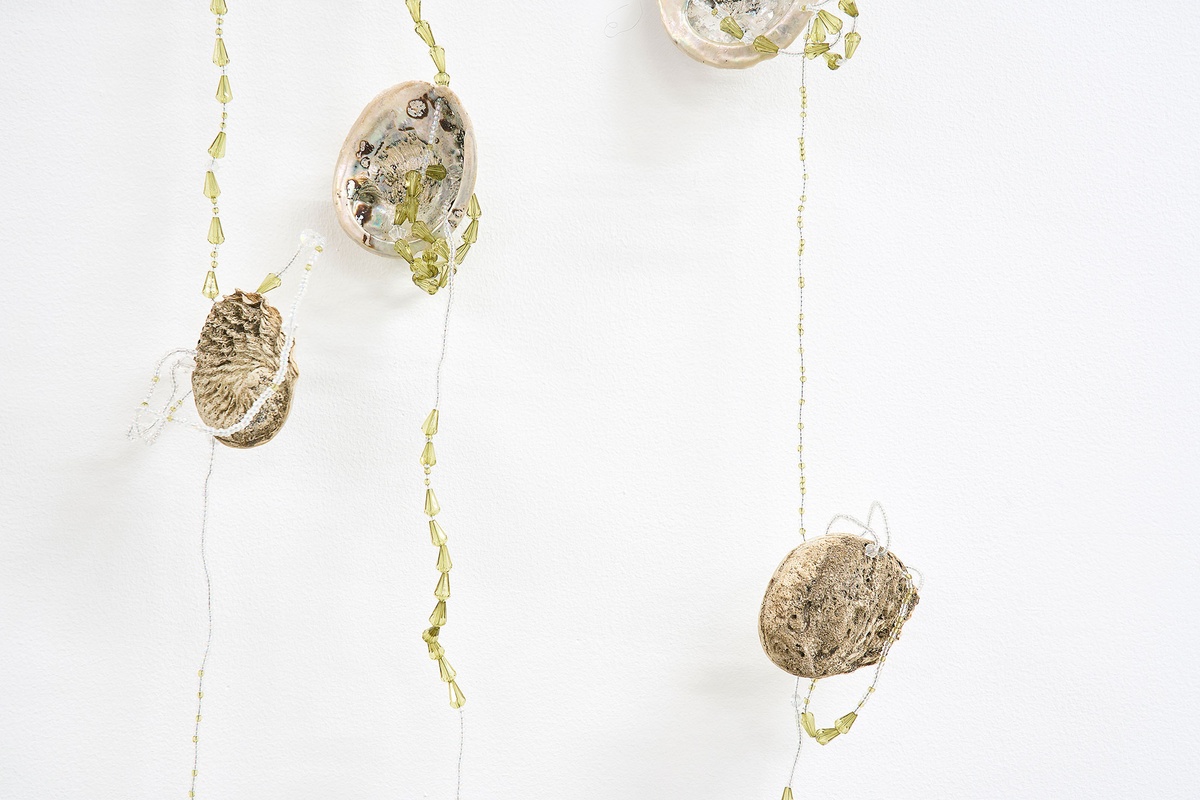
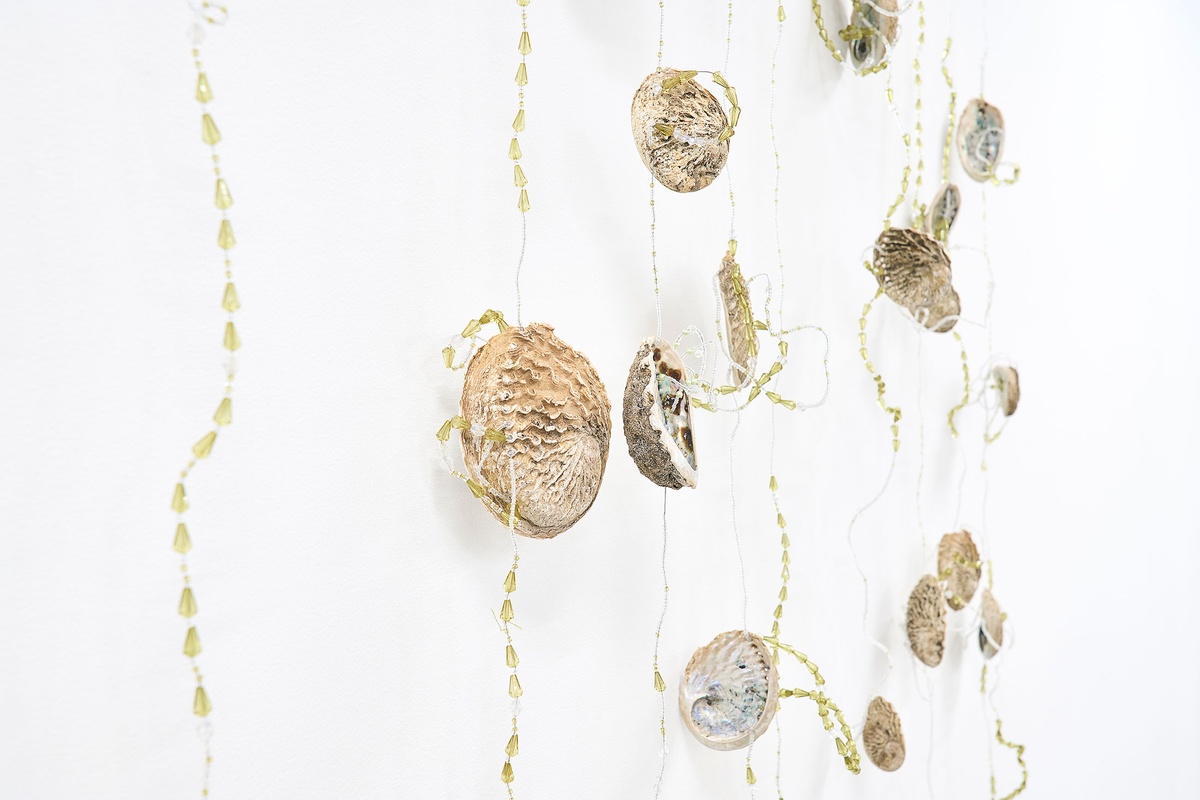
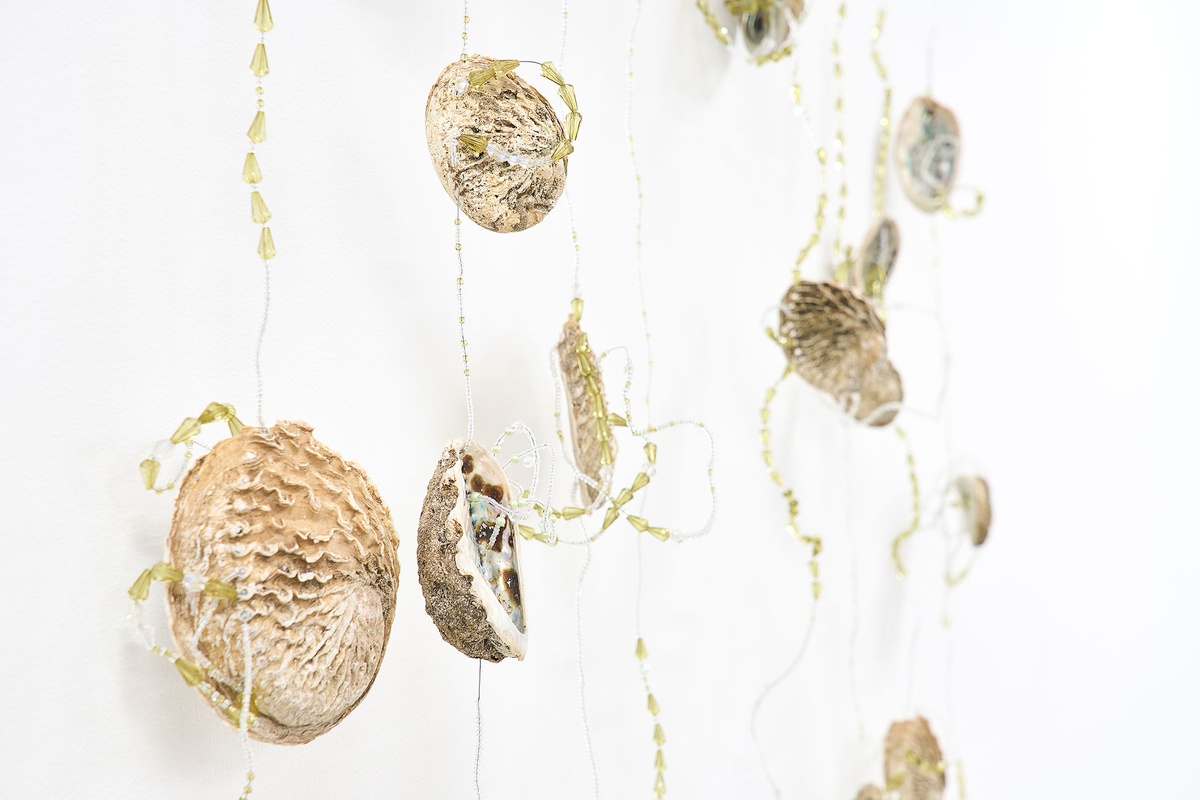
Nestled amongst the list of practical components, a prayer is listed as one of the materials of 10 Hail Mary’s. The artist strings iridescent beads and perlemoen shells in the cadence of a rosary. As an ode to her family, who was moving through a difficult time filled with grief, Brand reflects on rituals from her Catholic upbringing and the places she grew up – like her childhood summers in the seaside town, Kleinmond. These places hold more than personal memories, but also carry scars of spatial and social violence. Apartheid-era forced removals interrupted generational relationships to the land and the sea in many communities across the Western Cape.
Brand embraces found materials (in their ephemerality) to contemplate cycles of loss and return in nature. She is interested in how energy is embedded in objects. The abalone shells here have been foraged from the river banks in the Overberg district, known for its perlemoen-diving hotspots found in the seas of Kleinmond and Hawston. The mollusks are then quickly shucked and their shells discarded to avoid detection from anti-poaching authorities. Speaking to Lemeeze Davids and Amandine Vabre Chau (2025), the artist notes, “I found myself picking up a lot of my grandmother's habits to reconnect with faith and ancestral knowledge. She would collect these shells and repurpose them.”
b.1989, Cape Town
Jody Brand’s reflections on cultural inheritance and history extend beyond her first medium, photography. Grounded in the sensory experiences of her own childhood, Brand translates haptic memories – her own, together with those inherited from her maternal matriarchs – in textiles stained with atchaar, keepsakes sewn into sealed pockets, and a prayer written in her grandmother’s hand stitched onto floating compositions. Of the latter, she says:
I have been talking about them as flags, but not necessarily thinking about them as flags. In my family, we have a history of land dispossession. What does a flag mean in a context of dispossession? What is a flag for a place that doesn’t exist? If I take these outside, could the flags be portals or windows to energies from the past, becoming these in a different element?
Where forced removals legislated entire communities as landless, Brand calls on her childhood recollections of camping with her family in the small fishing village of Kleinmond, of entire summers spent out in the land, as an act of culture-building that evidences being of and from a place, embodying its knowledge and traditions. The artist remains keenly aware of the threats of dispossession that continue to face coloured communities in South Africa; Kleinmond’s fishing families are increasingly threatened by quotas and commercial enterprises. Foodstuffs like perlemoen (abalone) are delicacies exploited by the export market, which disrupts the sustained relationships these communities have with the oceans from which they subsist. “How do you talk about something difficult?” A4 assistant curator Lemeeze Davids asked during a studio visit with the artist, suggesting that Brand’s work offers a sensorial encounter as a possible answer, where pickled and aromatic foodstuffs used as dye on homemade fabrics and arrangements of shells hung as tapestries touch environmental, political and personal concerns.