Noria Mabasa (attributed to)
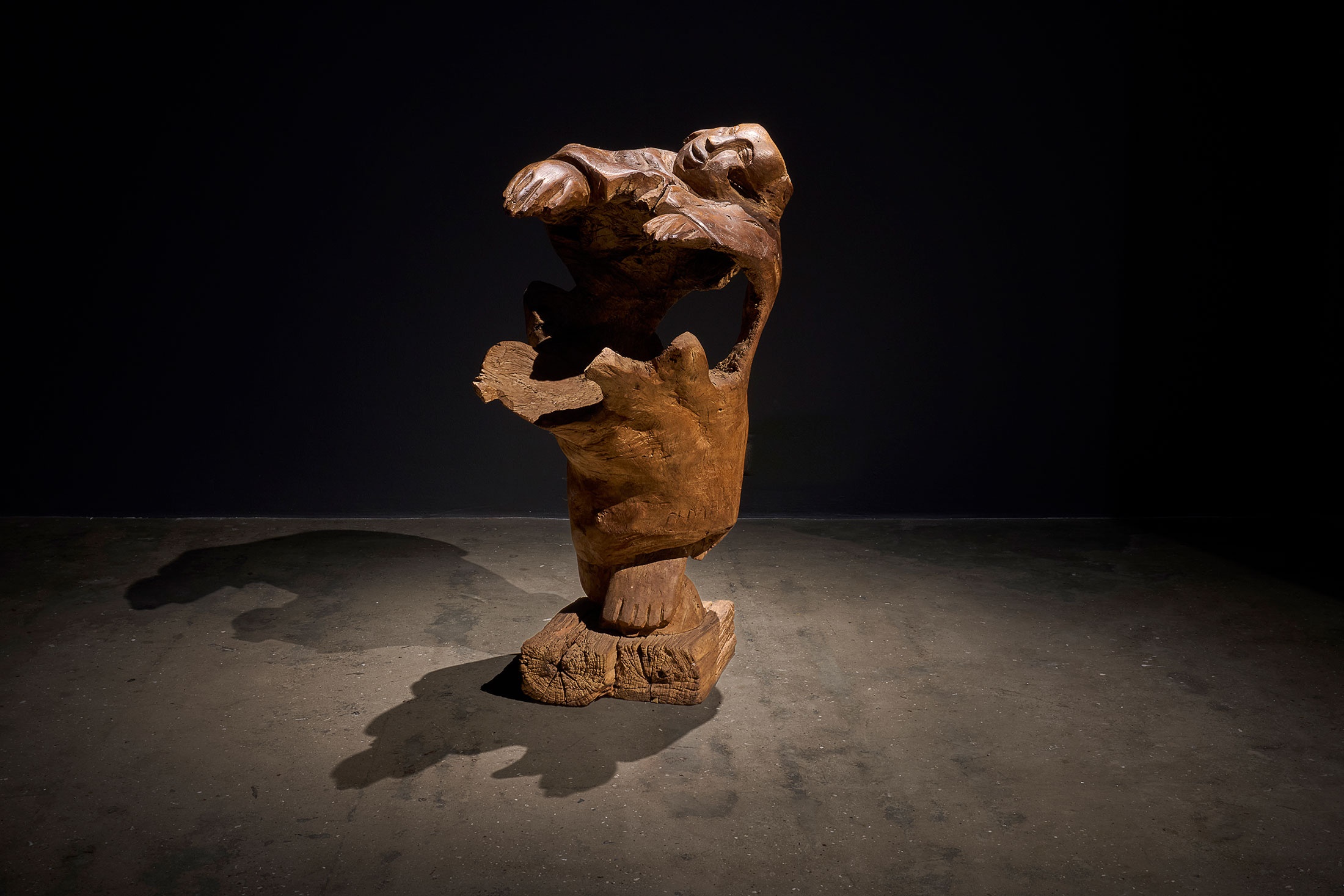
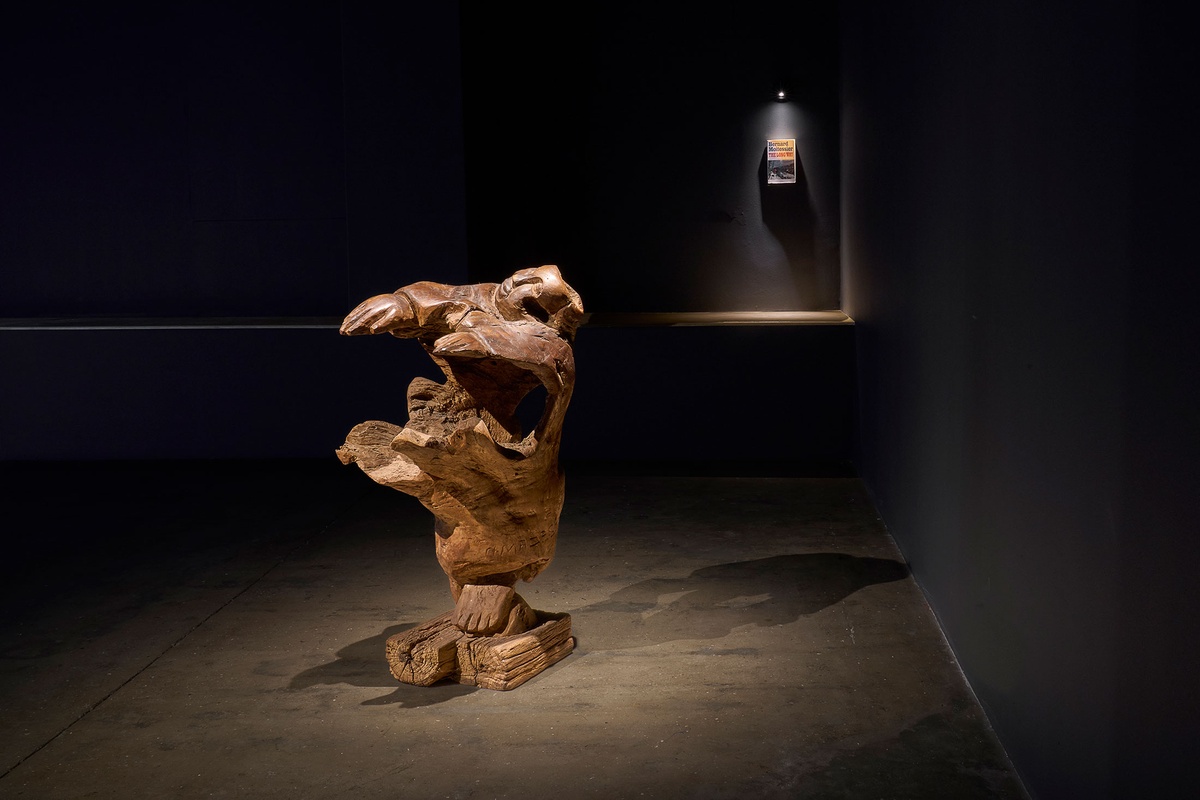
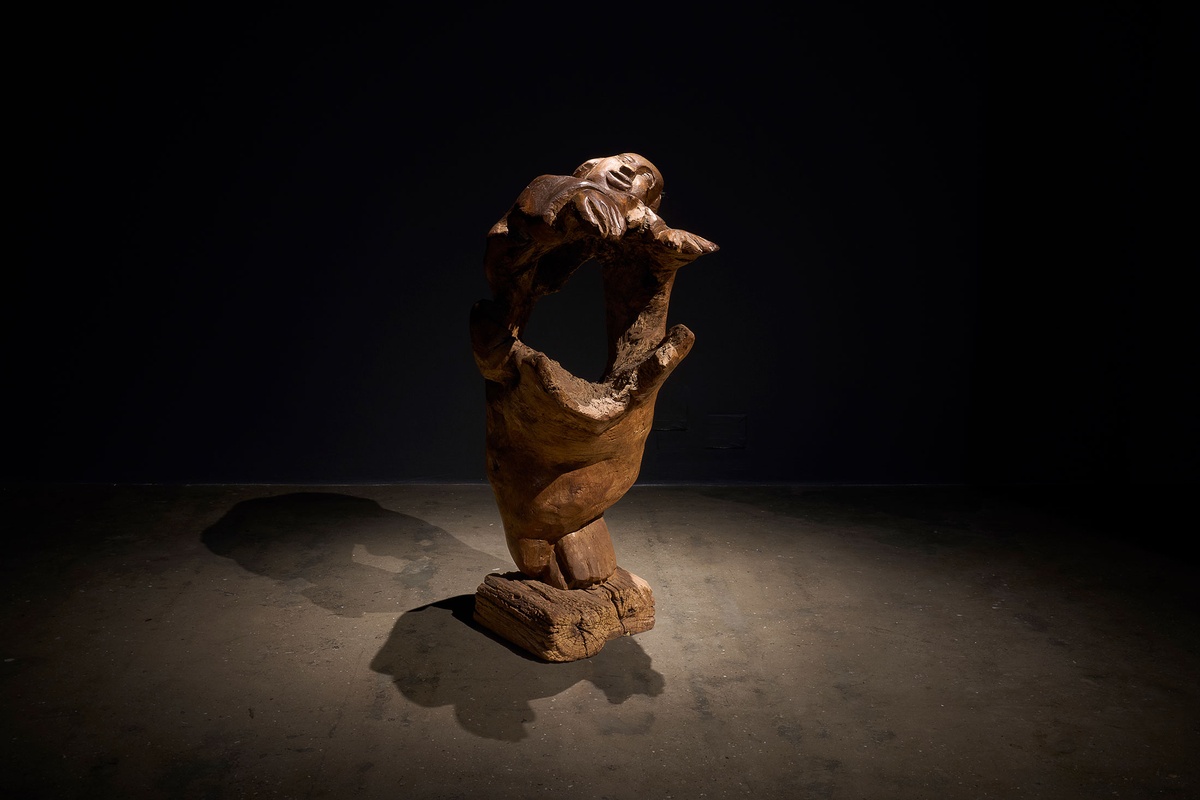
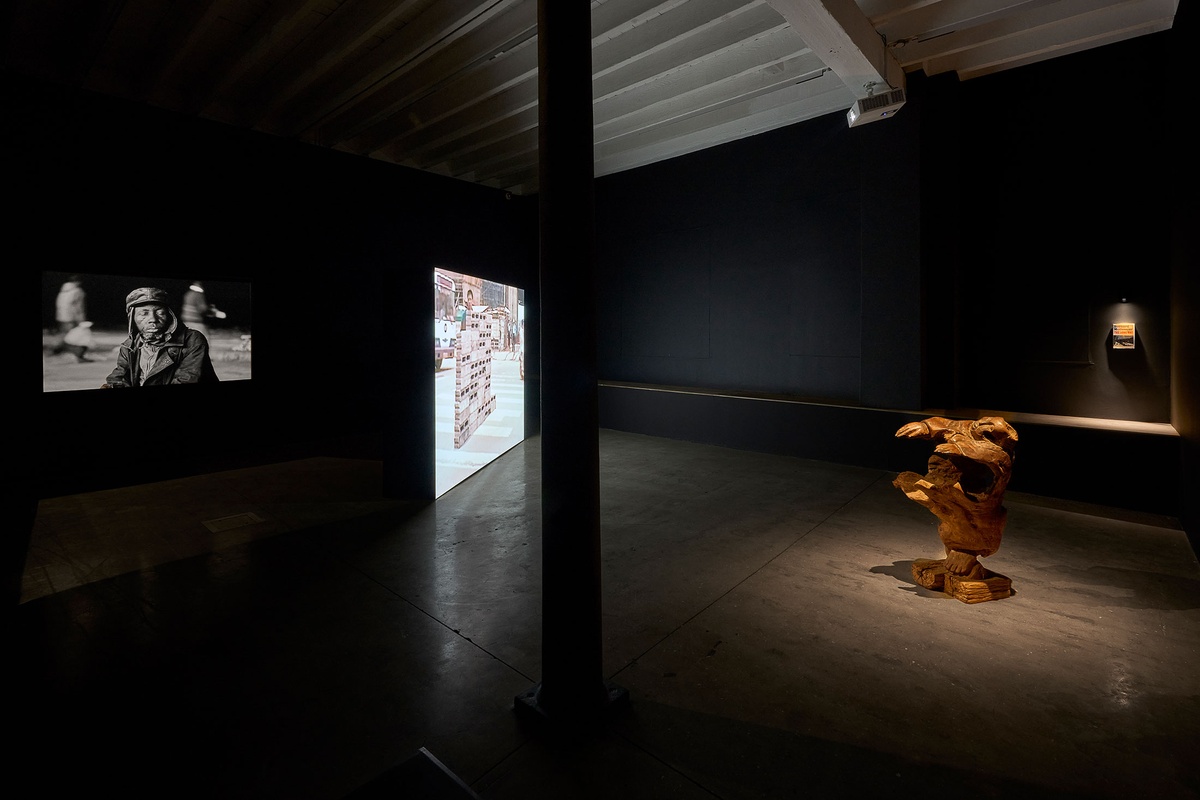
Moses appears to be carved from what remains of a hollowed trunk (from its patina, possibly recovered as driftwood). A smooth, almost Buddha-like head and two hands extend as if sleepwalking. The centre of the piece is a cavern, enclosing an absence. This isn’t the only mystery or missing piece to this work. Having received it listed as ‘n.d.’, no date, the A4 team sought to contact Noria Mabasa to ask if she might recall when it was made. Her son did not recognise the work. While it bears Mabasa’s signature, Moses’ origins are, for the time being, muddied. We have selected, due to the presence of Mabasa’s signature, to refer to Moses as ‘attributed to Noria Mabasa’. Work to unearth its origin story continues.
b.1938 Xigalo, Limpopo; works in Tshino Village, Limpopo
“I dreamt of a wooden log floating on the water and after waking up, went to find the log and started carving it.” The anticipation of a piece of driftwood in Noria Mabasa’s dream changed the trajectory of the Venda sculptural tradition. Before Mabasa’s compulsion to follow a divine prompt, Venda women did not carve in wood. This artistic pursuit was reserved for men, while women worked in clay pottery. As she picked up lost, floating, and discarded pieces of wood, Mabasa began to heal from a many-years-long illness that had rendered the artist almost paralysed. She never again sealed the boundary between sleep and consciousness, trusting the messages and visions of the dream state to guide her waking life, sculpting and carving narratives of the Venda people’s origins, notably those of the Singo, together with women’s stories. Her sculptures archive the cultural memory of a predominantly oral storytelling tradition while broadening thematics and concerns to include contemporary anxieties and historical injustices. A child of a rural village, as a young girl Mabasa finished only one year of school before being withdrawn and tasked with completing chores for her family at home. The artist would perhaps decry being called ‘self-taught’, the phrase seeming to exclude the spiritual authorship of divine interveners who guide her life and practice. (In preparation for her exhibition Shaping Dreams at the Nirox Sculpture Park in 2022, Mabasa is reported to have responded “but it’s not me,” when praised for her work, referencing herself as co-creator rather than single authorial voice.) While achieving significant renown and with no formal training, Mabasa has taken it upon herself to serve as an educator and mentor. Her homestead is a hub for artistic pedagogy, where wood carving, pottery, and sculpture are taught to younger artists and community members. In 2002, the South African government awarded Mabasa the Silver Order of the Baobab for “exceptional achievements in unique forms of fine arts under trying circumstances.” In April 2023, the University of Johannesburg conferred an honorary doctorate in Art and Design on Mabasa in recognition of her decades of practice, cultural contribution and role in nurturing new artists.