Penny Siopis
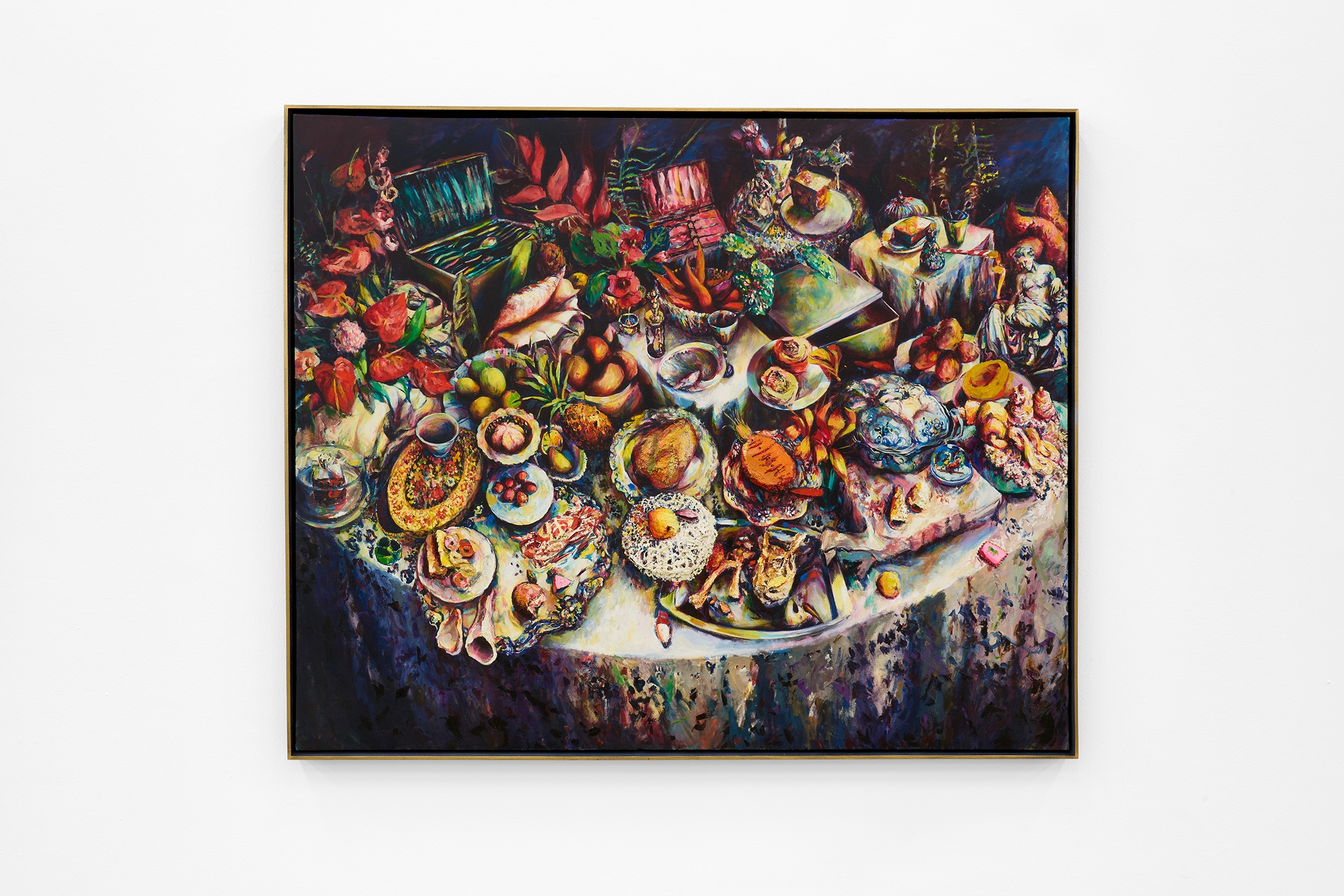
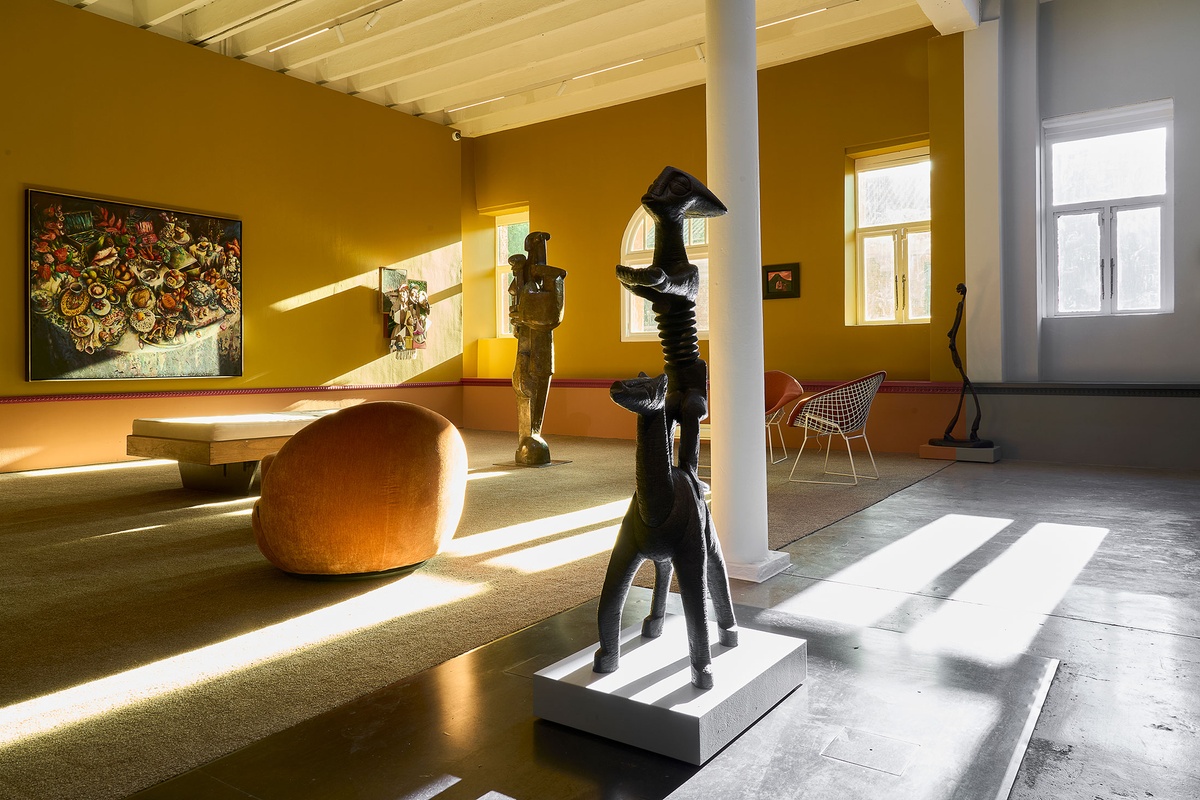
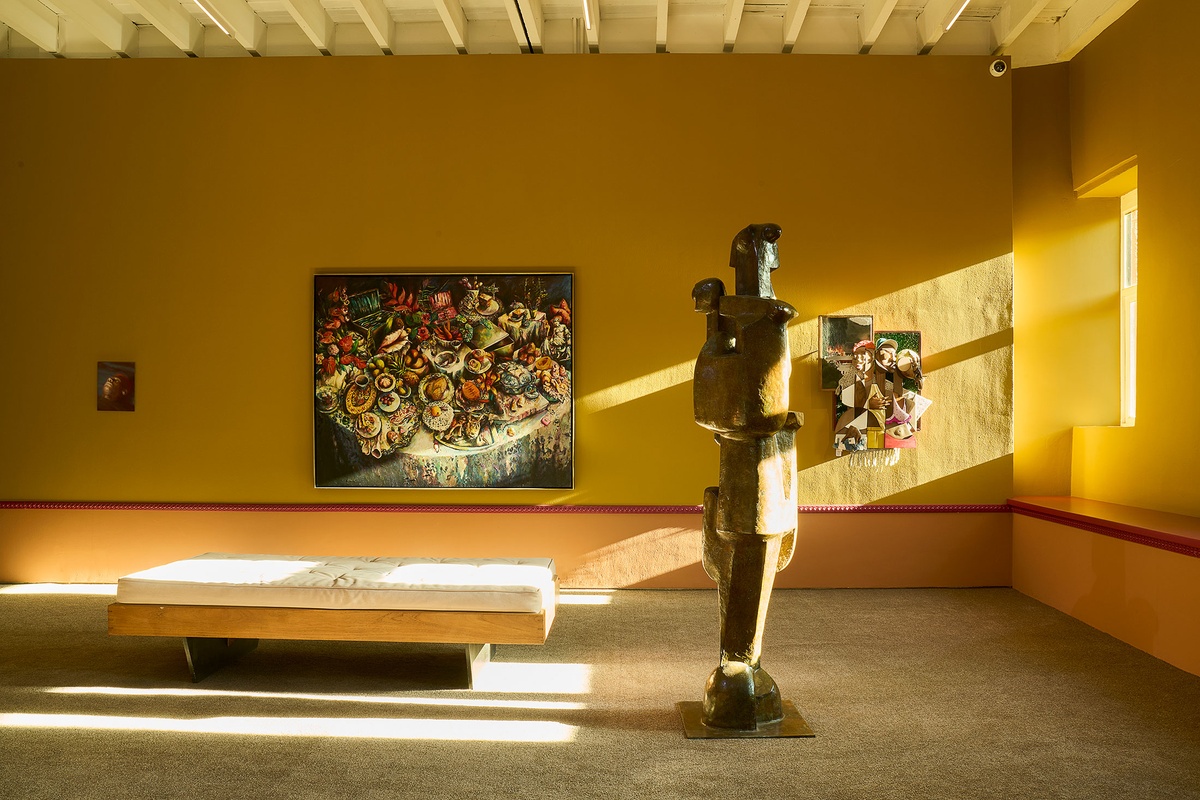
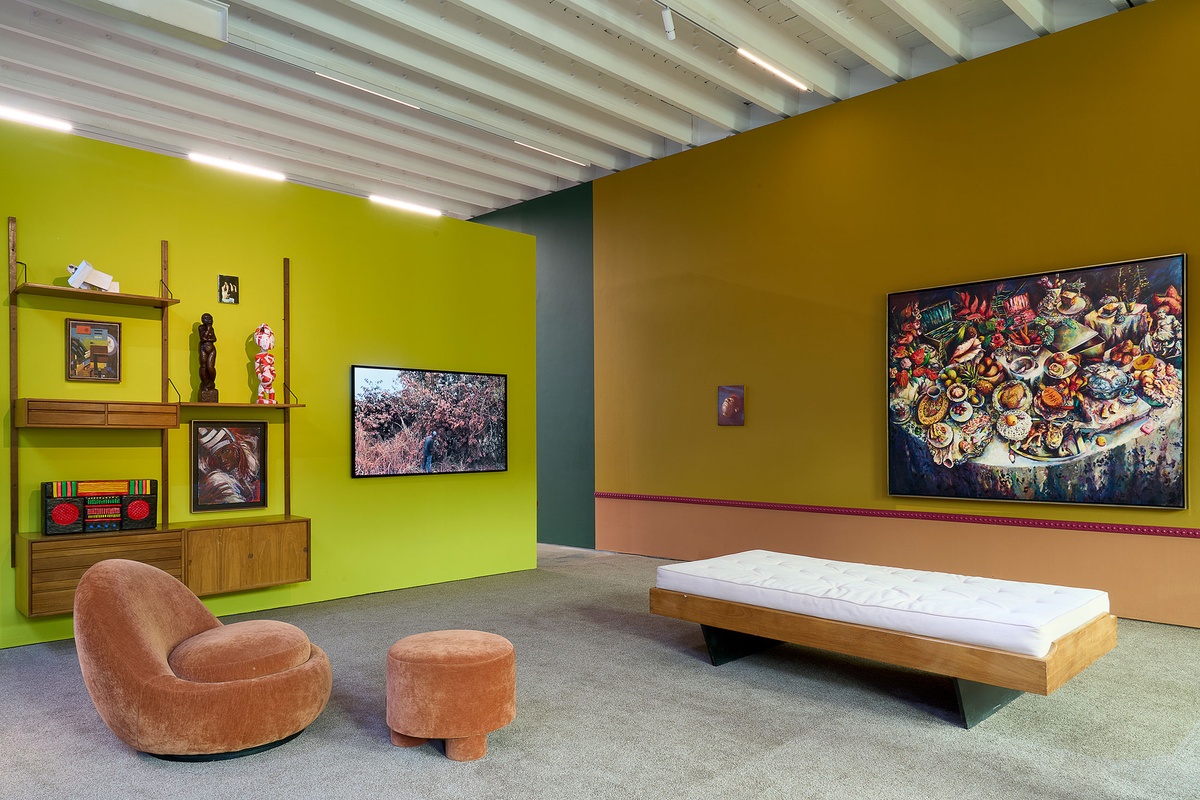
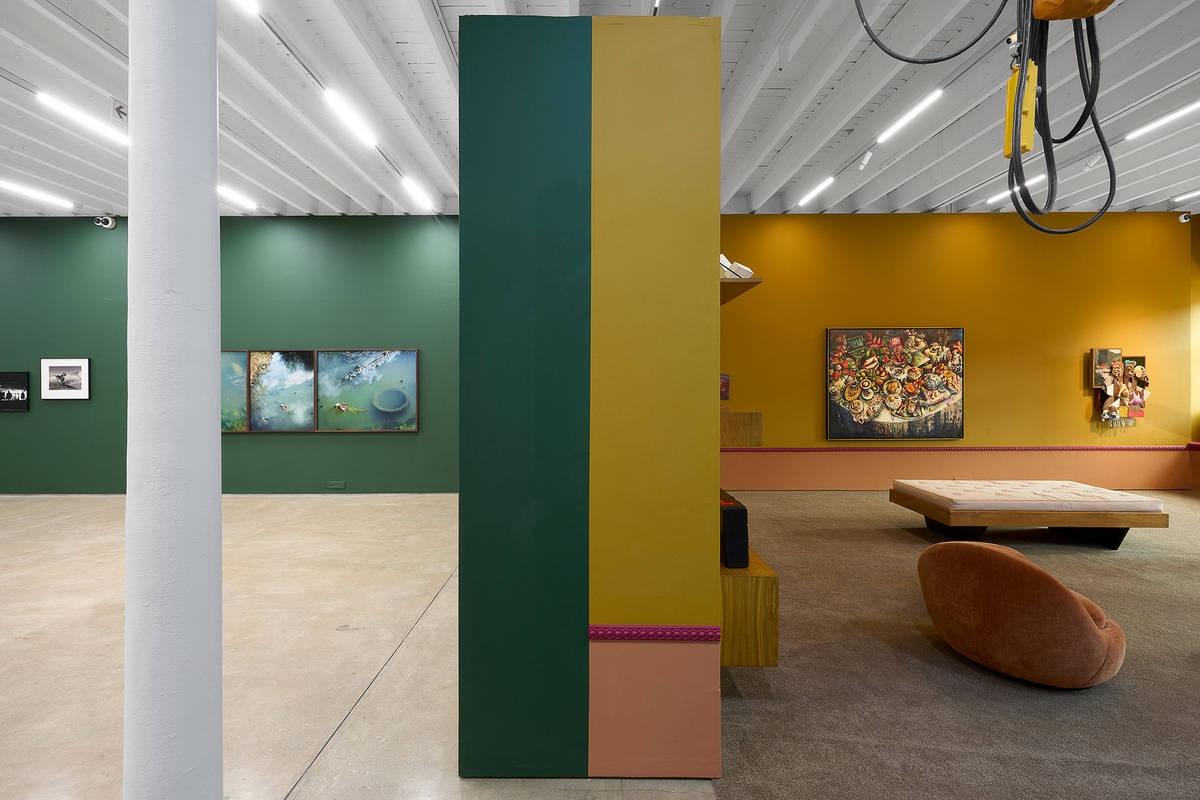
Included among the artist’s baroque banquet paintings of the mid-80s, Setting pairs art-historical artifice with material too muchness. The canvas, much like the table it describes, is laden with excess, its accretions of oil pigment differently scraped, brushed and piped onto its surface. ‘Impasto’ feels an imperfect descriptor in conveying the density of paint applied, much as ‘still life’ seems a relatively restrained genre largely disinclined to displays of this decadence. In medium and image, the composition is one of claustrophobic abundance. Where the carefully staged arrangement of food and objects in such paintings traditionally speaks to vanitas themes of mortality and life’s transience, in Siopis’ rendering the feast becomes an allegory of political waste and decay, alluding to both the colonial past and then-apartheid present. The fruit of extractive wealth and exploitative riches has begun to spoil and sour, turn overripe and rot. The gluttons are absent from the frame, the party come and gone. Change is coming – South Africa entered its second State of Emergency in June of 1986, the year this painting was made, political violence was escalating, the army remained engaged in a covert border war, and international pressure continued to mount. The democratic dispensation, elected into power the following decade, would see a new political elite take their seats at the same table.
b.1953, Vryburg
In describing Penny Siopis’ practice, a necessary caveat: it is too slippery in form, too wide-ranging in ambition, to be distilled to pithy statement. Hers is an “aesthetic of accumulation,” a logic of excess, a hoarding of signs. Edges, boundary lines, beginnings and endings, states of change – these are among the subjects that inform her enquiries. As to a single preoccupation, the artist offers residue. A ‘historical materialist’, Siopis looks to the traces of past action, asks after the vibrancy of artefacts made and found, what they might recall of their provenance. She moves between modes with limber agility, playing the roles of both artist and archivist. While predominantly a painter, Siopis’ practice extends to include found film and objects in a sustained meditation on trauma as it appears, the artist writes, “in material amalgam.” From her early ‘history’ paintings to Will, a growing collection of objects and their anecdotes to be bequeathed to friends and family at the artist’s death, loss (past, forthcoming) is a constant undertone. Pursuing a “poetics of vulnerability”, Siopis transcribes, however obliquely, shared and individual griefs – punctuated by small moments of tactile transcendence – in the inherited images and historical flotsam, in the residue, with which she works.