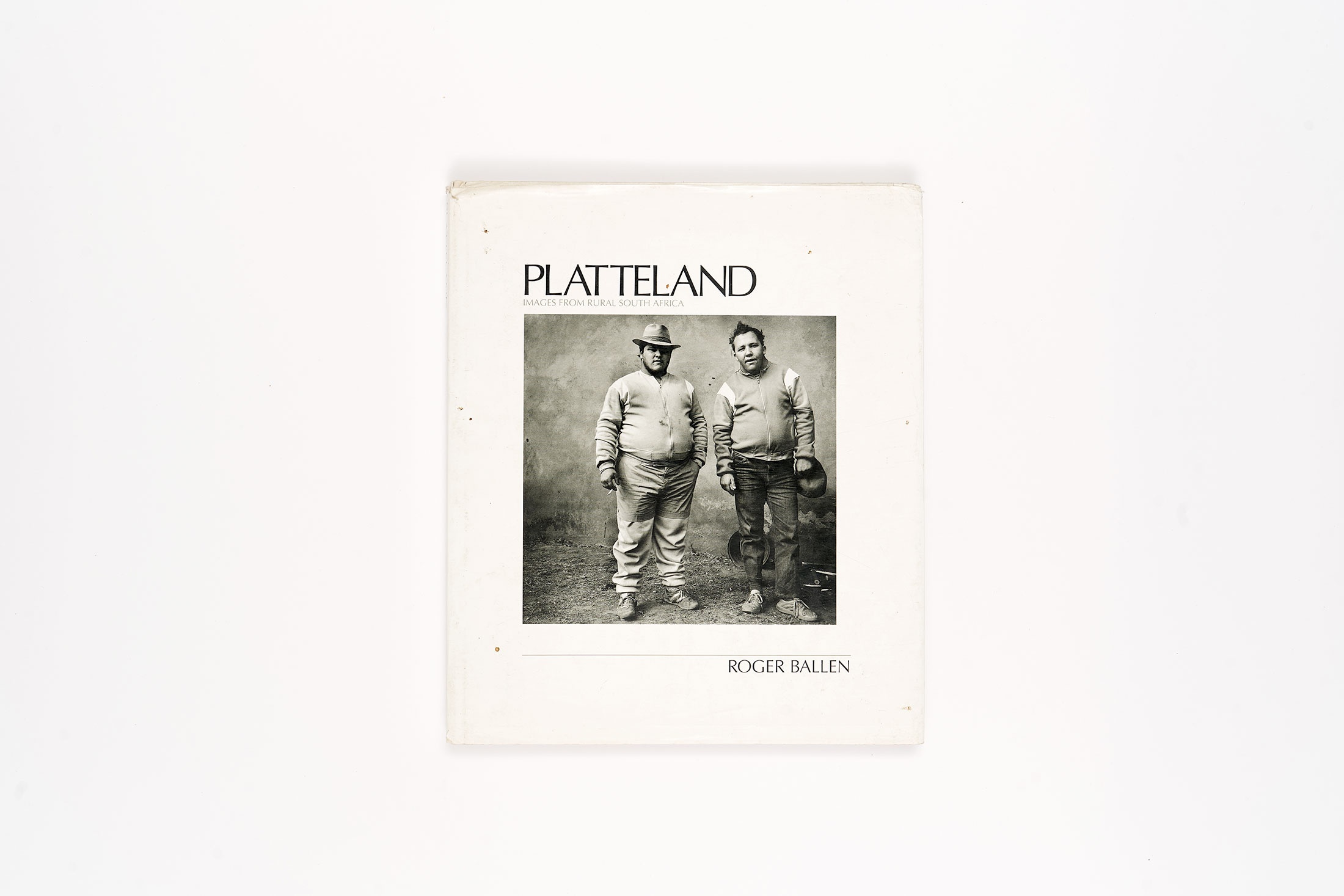
Ballen’s second photobook, Dorps (1986), a study of rural South African townsfolk and the vestigial structures that informed their identities, is a coda to a defined way of looking, one in which a complex social phenomenon, white poverty, is critically parsed in the naturalistic language of documentary photography. While still motivated to document rural impoverishment, Platteland is a book comprised of only portraits, dispenses with the Walker Evans politesse. Ballen’s harsh flash starkly etches his “poor white” subjects, many photographed indoors. “Until recently the platteland mentality assumed that supremacy was the natural providence of whites,” Ballen writes in the introduction. The book’s publication and accompanying exhibition provoked a storm. Ballen, an émigré from New York and full-time geologist at the time, was accused of exploitation; he even received death threats. Ballen’s subsequent book projects transmogrified these impoverished habitats into psychological sets and his subjects into Beckettian actors.
ロジャー・バレン
プラットランド:南アフリカ農村のイメージ
ヨハネスブルグ、ウィリアム・ウォーターマン、1994年
136ページ
バレンの第2作『ドープス』 (1986年) は、南アフリカの農村に暮らす人々と、彼らのアイデンティティを形づくる残存的な構造を扱った研究であり、一定の視線のあり方に対する一つの結語をなしている。そこでは、白人貧困という複雑な社会的現象が、ドキュメンタリー写真の自然主義的な語法によって読み解かれている。
農村の貧困の記録という動機を引き継ぎつつ、ポートレートのみで構成された『プラッテランド』 は、ウォーカー・エヴァンス的な抑制から距離を取る。バレンの強いフラッシュは、しばしば屋内で撮影された「貧しい白人」の姿を鋭く刻み出している。
「最近まで、プラッテランドの精神は、白人の優位が自然に与えられたものであると前提としていた」と、バレンは序文で記している。
本書の刊行と展覧会は大きな反響を呼び、ニューヨークからの移住者であり当時は地質学者として働いていたバレンには、搾取であるとの批判が向けられ、殺害予告さえ届いた。
その後の作品において、彼はこれらの風景を心理的な舞台のように捉え、被写体をベケット的な人物として描いていく。