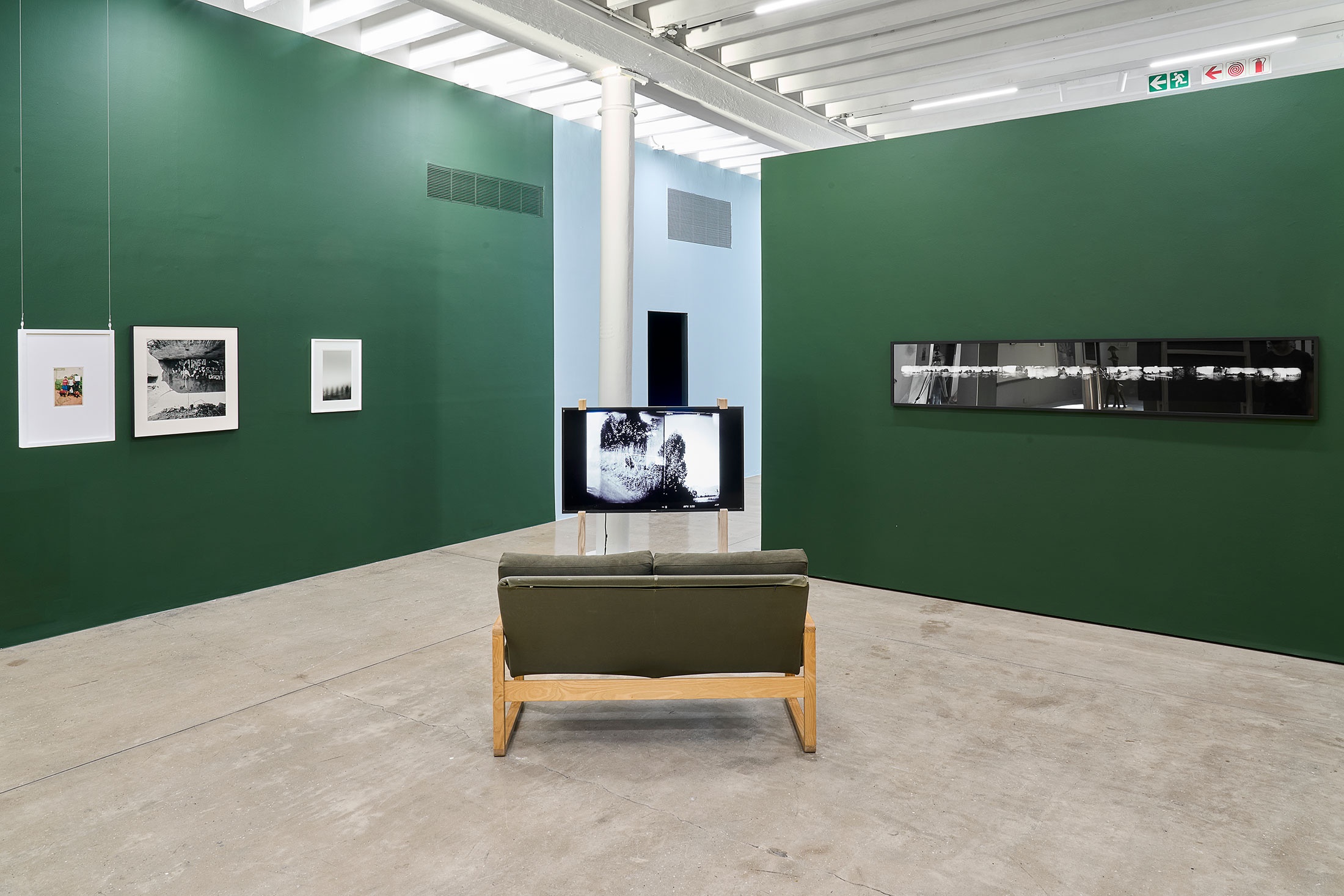
K.M. Perhaps because of its technological underpinnings, photography has hierarchies and conventions around what makes a ‘good’ or ‘bad’ picture. With this in mind, I’m interested in your process of coming to a place where you’re accepting or even welcoming of the ‘errors’ – the blurriness or the shadows. When did that become comfortable for you?
J.R. You’re speaking specifically about South Africa?
K.M. Yes.
J.R. It’s a curious thing when you have a medium that is technically complex – this is a generalisation, but I think quite often, people who work in very technical mediums, where skill and proficiency are highly valued, can sometimes be rather self-ghettoising – this is in relation to a contemporary art world where appreciation of an artwork is less about skill than it is a bunch of other factors. My experience is that professional photographers (compared to ‘artists’) struggle with this. I remember being invited to judge a photography award and there were these categories: aerial, wedding, cars, landscape, wildlife, and then there was just ‘art’. Anything that was blurry went into ‘art’ and anything they felt would not meet the specs of another category. I remember discussing this with my very dear friend Dennis De Silva. He’s a master printer.
K.M. Yes, he also prints Sabelo Mlangeni’s photographs.
J.R. Yes, that’s right. He printed for David Goldblatt and Santu Mofokeng as well. Dennis said, “Jo, it all begins and ends with an opinion”. That was his definition of contemporary art. For years I was between an art world and a photography world. At the time the focus was documentary and struggle photography, and my work didn’t fit. Nothing was ‘happening’ in my pictures. But also, when I first showed with Goodman Gallery in 1997, Linda Givon said, “You’re the first photographer I’ve allowed into the gallery”. Which was true, I was the first photographer exhibiting at Goodman, before David and others. And then, of course, all the mistakes became sexy. Taking a blurry, out-of-focus picture became about effect rather than an underlying conceptual premise.
K.M. Reading your interview with David in the Mail & Guardian, I laughed at your exchange about Nadir [Ractliffe’s first solo exhibition, which Goldblatt hung at the Market Theatre Gallery in 1989] – though of course, without being in the room, one can’t fully capture the energy of friendship underlying both your words. It reads as follows:
D.G. […] We argued because I pointed out that these were violations of photography.
J.R. Aberrations. You said they were aberrations of photography.
D.G. But I did appreciate the work.
How do you think he saw your practice? What do you think he appreciated?
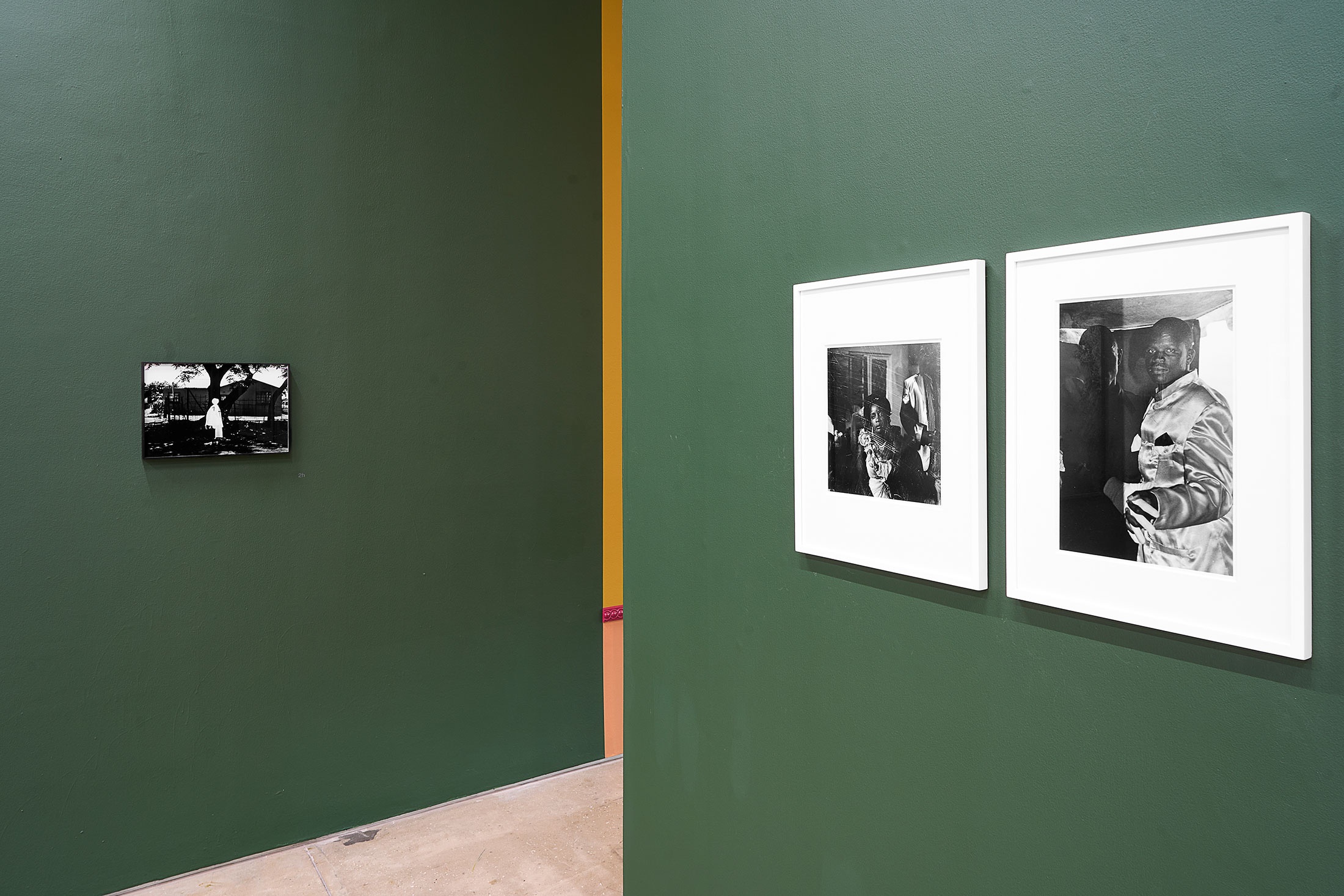
J.R. David and I had a curious relationship. I loved him as a friend – I never thought of him as ‘the David Goldblatt’ or as ‘the mentor’. He did become a person to bounce off ideas with, but quite often when we disagreed I knew I was on the right track. [Laughs] When I showed at Goodman with Guess Who Loves You (1997) – a series of giant photographs of dog toys – he said the toys were just detritus. I said, well somebody could look at a picture of a girl in a tutu like he had done with In Boksburg [Girl in her new tutu on the stoep, 22 June 1980] and think that was meaningless.
K.M. Yes, looking at In Boksburg or Particulars, the photographs are so ambiguous and soft in their approach to meaning-making or ‘truth-telling’. Many of the works from Sabelo’s Isivumelwano series are dated 2016. In that same year, Sabelo notes that he had very generative discussions with David about his work. It’s interesting to see that this series has some of the clearest examples of what I would describe as ‘aberrations’ in Sabelo’s practice: burns, scratches, and blurs in the prints; faces obscured by shadows; strange angles. I wonder – whether he articulated it or not – if you think you might have softened David to the idea of ‘showing your mistakes’ in some way?
J.R. Well, I don’t know. He loved my photograph of a dead donkey [End of Time (1996/1999)]. He saw it and said, “Now you’ve got it.”
K.M. This leads back to Nadir. I read an interview where David said, “the kind of photography I am interested in is much closer to writing than to painting”. I imagine he was thinking about a particular kind of writing, like journalistic reportage. Looking at your initial words about Nadir in your Master’s thesis, you were interested in writing as well, but you were referencing poetry and speculative fiction.
J.R. It’s also a question of time and what was happening. The authoritative voice was really strong in the ‘80s, and that’s why I just didn’t fit. There wasn’t the space to interrogate the ambiguities of photography. It had to be about the truth. Because otherwise, what were you doing it for? It was about showing the violence of what was happening.
K.M. You produced Nadir in the midst of that time. How did you conceive of those works? Were there other photographers whose practices encouraged your more subjective approach and your use of photomontage?
J.R. You’re supposed to have some art historical basis for your work in an MA thesis. When I was finishing Nadir, I realised that I had actually spent the time reading literature and poetry. I ended up putting all of the work into a folder and going to see J.M. Coetzee at the University of Cape Town. By then I’d read Waiting for the Barbarians (1980). I remember him being very silent and... impenetrable. We had the works on the floor and he said, “I can’t comment on the merit of these artworks. But it seems to me that you’re interested in aspects of the apocalyptic”. And then he sent me a reading list. I still have that letter. So I started reading all of these books, like William S. Burroughs’ Cities of the Red Night (1981) and Lord of the Flies (1954) by William Golding. I knew nothing of South African photography. It was also a time when photographers didn’t often make books, except for David. Unless you knew the people, you didn’t know what they were doing. But in 1983, my dad brought a book back from his travels called World Photography and I found Robert Frank, my first love. The Americans (1958) was poetic and it had this feeling of being on the fly. Jack Kerouac wrote the introduction – I loved all of the Beat writers and poets. That was my first opening. I thought, “I want to make images like Robert Frank”. There was also Manuel Álvarez Bravo, who was like my God, and Josef Koudelka. His photographs look like theatre. And later, I came to know of Walker Evans and others.
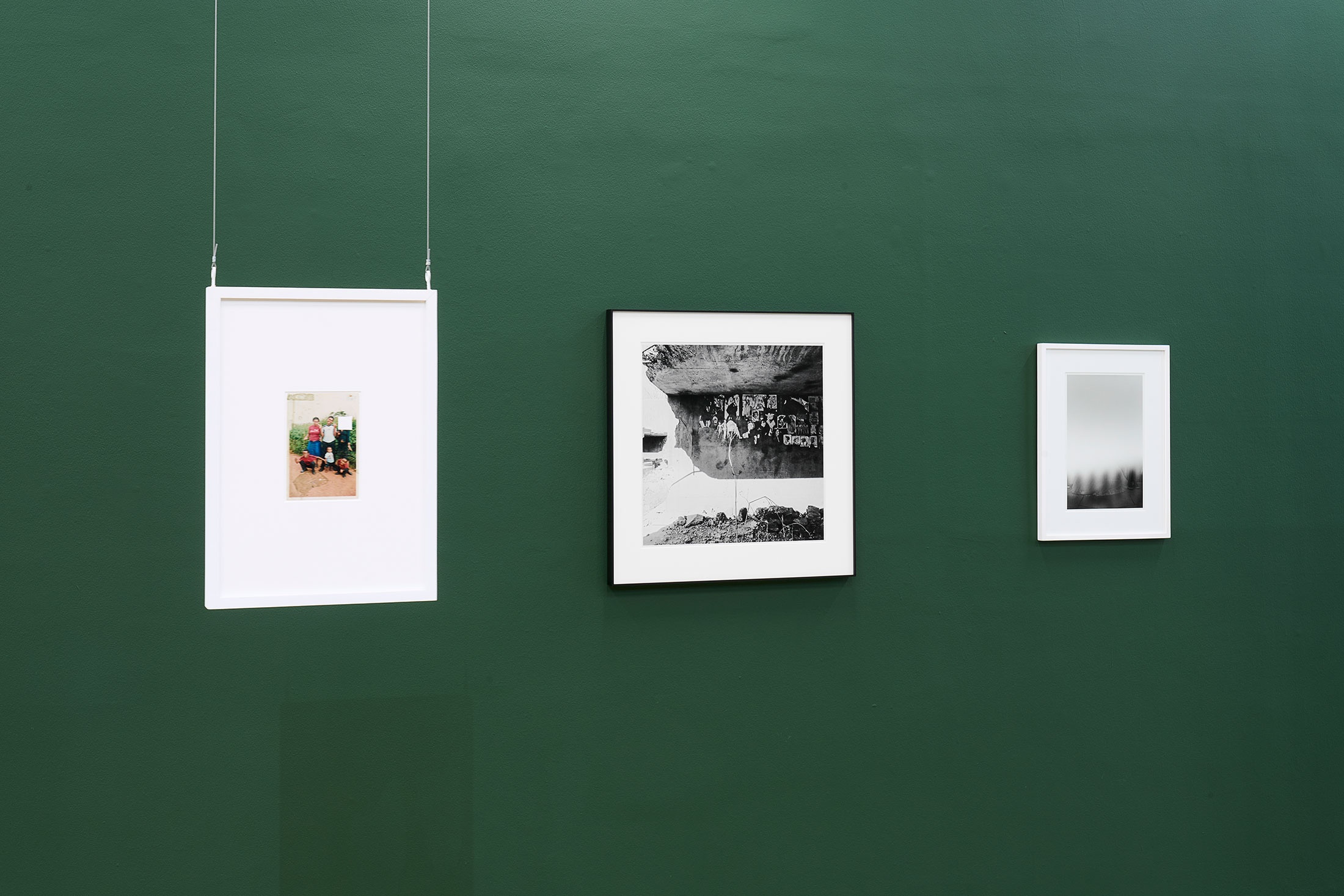
K.M. So you’re into photography and you’re doing your MA… When did you decide on photomontage? It seems like such a bold choice in that context, especially because you still photographed all the works included in the collages. In your thesis you describe the process of going to junkyards and even dog training sessions, trying to get these shots.
J.R. In the third year of art school I had done a couple of photo-etchings and they were a mixture of found images and my own photographs. I really liked their surreal quality. I have a closet desire to be a Surrealist, but I could never do that with straight photography. Where did you even find that thesis?
K.M. I downloaded it from the University of Cape Town’s website. Reading it gave me a great sense of calm. It supported many of my thoughts in the lead-up to the exhibition. Also, the exhibition’s title comes from T.S. Eliot, which I know can feel pretentious. I read your thesis and saw that you also quoted him and I felt like it might still be pretentious but at least somebody else did it too. [Laughs]
J.R. Every single body of work I produce ends up with a quote that pulls it together. That’s how my brain works.
K.M. I relate to that. There has to be a phrase that keeps the texture or the temperature of the project in my mind.
–––
K.M. I feel like photography forces you to be more social than other artistic practices. Maybe that’s too much of a generalisation…
J.R. That’s true to an extent. Market Photo Workshop (MPW) is the one community I found really generative. It was a world of working photographers and young, emerging photographers and we were all connected. I was Sabelo’s mentor while he worked on his series on street sweepers in the Johannesburg city centre ['Invisible Women' (2009)], through a fellowship he was awarded at MPW.
K.M. I didn’t know that. A beautiful, unintentional thing has happened where the photographers in the exhibition are so much more connected than I had thought. Almost everyone passed through MPW. Some of the artists were in Of Soul & Joy [the photography programme for high school learners in Thokoza, established in 2012 and directed by Jabulani Dhlamini] and then went to MPW because of that experience. In a book made in tribute to David Goldblatt after his passing, Sabelo wrote about a time in 2016 when they met regularly over the course of a month. He had reached out over email looking for critical feedback and David answered immediately, inviting him to his home. Sabelo said, “I walked out with a much better understanding of what I was doing and what I wanted to achieve with the work.” This continuing circle of mentorship and friendship feels very special. I can only access these relationships through anecdotes and retellings of conversations, so I don’t feel that I can express their full depth, but it is still present as an undercurrent.
–––
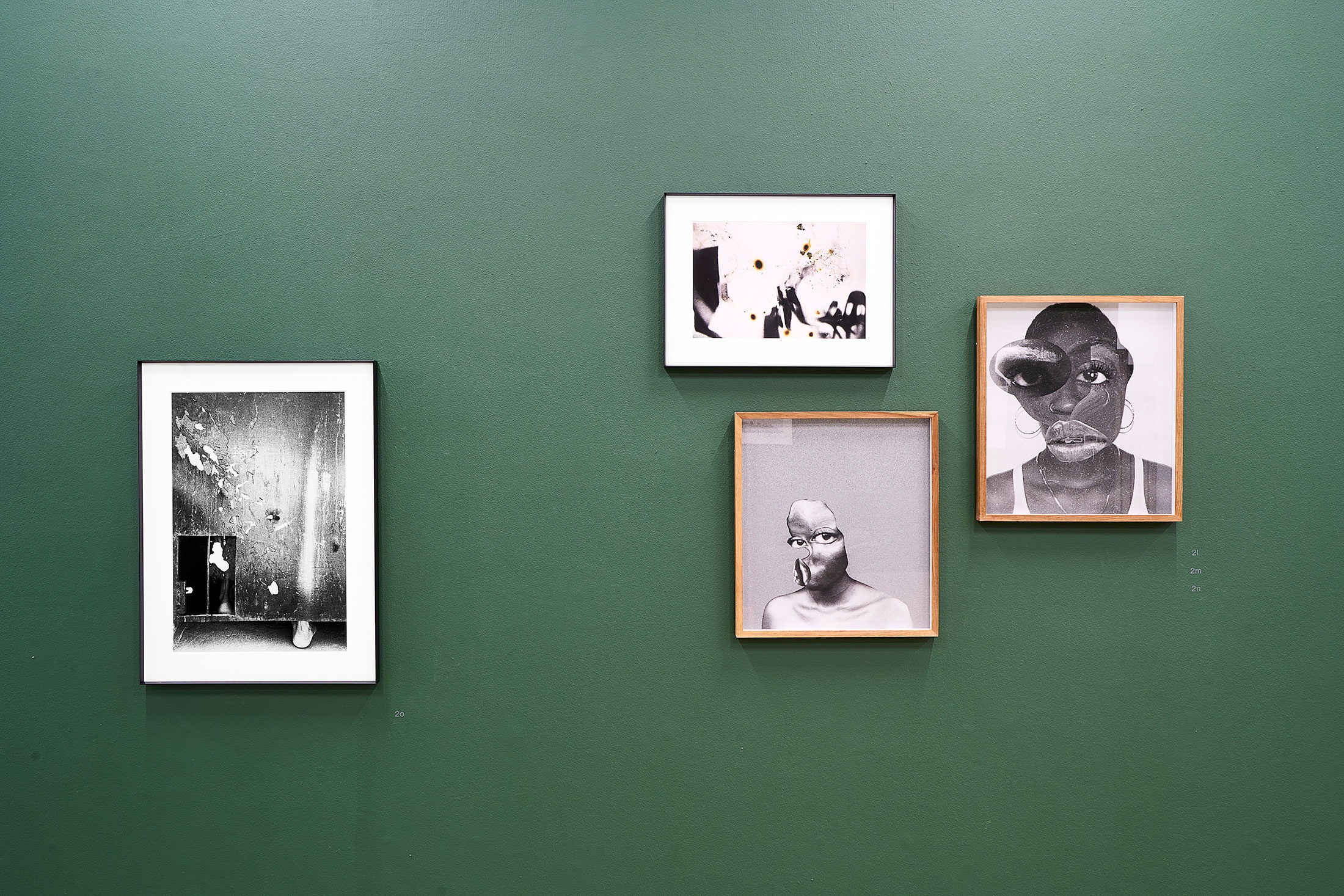
K.M. I’ve been looking at photographs and wondering when particular artistic choices might have been made and how much of the work comes into being before, during, or after shooting. The answer is different for every photographer.
J.R. For me intention is at the forefront, although it’s seldom formulated in any precise way. Rather I have a vague notion about something, an idea about the possibility of the photograph and how it would function within a particular context – like photography’s capacity to work with silence, for example. And then I wait for something to happen, or something incidental occurs and I think, “This is interesting”. It is about being attuned to what is happening conceptually and intellectually as you go, but it is also an intuitive process; the integration of all these things. Going to Johannesburg from Cape Town – from the Michaelis School of Fine Art to the University of Witwatersrand – I felt intellectually ill-equipped. I felt I needed to make up for it by being clever in other ways. “I’m not good at theory but I’m clever at paying attention.”
–––
K.M. At the outset of this project I thought, I’m doing a photography exhibition, maybe I need to look back to Roland Barthes like we did in university. Reading Camera Lucida felt very different now than it did then, more emotional and less theory-heavy. He expresses something so vital about photography...that at its core, photography is unlike any other media in the sense that it is about light particles captured from a physical body or object and processed by a machine, magically appearing onto the page in silver molecules. Distortion and montage can’t entirely take away the relationship of the photographic image to the reality of the thing itself.
J.R. It’s alchemical. Which is why I still work with analogue. Obviously I’ve made digital prints when I needed to, but I prefer analogue. In the beginning of Camera Lucida, Barthes says, “I am looking at eyes that looked at the Emperor.” When I first read that, I misunderstood it. I thought he was talking about the eye of the photographer. I didn’t realise that there was another gaze from within the picture outwards to the viewer. I used to say that photographs are inert projections. Now I understand that they are not passive things. The photograph pushes back at you.